# Implementing Real-Time Anomaly Detection with OpenObserve and Random Cut Forest
> This comprehensive guide explains how to implement real-time anomaly detection using OpenObserve and the Random Cut Forest algorithm for time series data. Learn what anomaly detection is, how OpenObserve streamlines monitoring, and step-by-step instructions for setting up a robust anomaly detection system. Discover common challenges, troubleshooting tips, and best practices for scalable, cost-effective anomaly detection solutions.
Source: https://openobserve.ai/blog/real-time-anomaly-detection-openobserve-random-cut-forest/
Published: 2025-06-01
Authors: Prabhat Sharma
Category: How To
Tags: Enterprise, OpenObserve
---
## What is Anomaly Detection in Machine Learning?
Anomaly detection in machine learning identifies unusual patterns or outliers in data, making it essential for cybersecurity, finance, IT operations, and real-time monitoring. Also known as outlier detection, machine learning anomaly detection helps teams spot deviations in **time series data** over hours, days, or months, preventing costly incidents.
### Key Use Cases for Anomaly Detection
- Fraud detection in banking
- System health and performance monitoring
- Intrusion detection in cybersecurity
- Predictive maintenance for equipment
Organizations leverage **anomaly detection systems** powered by advanced algorithms like **Random Cut Forest** or autoencoders to automate monitoring. These systems scale efficiently, reducing manual oversight and enabling real-time anomaly detection for proactive incident response.
---
## What is OpenObserve for Real-Time Monitoring?
**OpenObserve** is an open-source observability platform designed for real-time monitoring and analysis of logs, metrics, and traces. It provides a unified interface for streamlined application debugging, root cause analysis, and real-time anomaly detection using OpenObserve. Its scalability makes it ideal for modern cloud and hybrid environments.
### Why Choose OpenObserve for Anomaly Detection?
- Native support for streaming data and real-time data analysis
- Seamless integration with toolchains via flexible APIs
- Cost-effective solution for large-scale log and metrics analysis
Teams often use anomaly detection integrated into OpenObserve to build proactive alerts or employ machine learning models for advanced anomaly detection algorithms.
---
## How Time Series Anomaly Detection Works
### Understanding Time Series Anomaly Detection
Time series anomaly detection analyzes logs, metrics, or streaming data to identify deviations from expected patterns. Common workflows include:
- Monitoring log volumes, system metrics, or KPIs over time
- Using machine learning anomaly detection to detect anomalies
- Setting up threshold-based or model-based alerts for real-time anomaly detection
Algorithms like Random Cut Forest, Isolation Forest, and deep learning autoencoders excel in detecting anomalies in high-dimensional or complex time series data.
> **Q: What is time series anomaly detection?**
> **A:** It’s the process of using algorithms to detect unusual patterns in time-based data, ideal for monitoring and security applications.
---
## Understanding Random Cut Forest for Anomaly Detection
### What is Random Cut Forest (RCF)?
**Random Cut Forest (RCF)** is an unsupervised **anomaly detection algorithm** optimized for real-time anomaly detection in time series data and streaming environments. It requires no labeled data and handles high-dimensional datasets, making it perfect for anomaly detection for time series data.
#### How Random Cut Forest Works
- **Forest Construction**: Builds multiple random decision trees (100–256 trees for optimal results)
- **Random Cuts**: Partitions data via random feature splits
- **Isolation Measurement**: Calculates how easily a point is isolated (fewer splits = higher anomaly score)
- **Anomaly Scoring**: Assigns higher scores to easily isolated points
**Advantages of Random Cut Forest**:
| Algorithm | Real-Time | No Labels Needed | High-Dimensional | Memory Efficient |
|--------------------------|-----------|------------------|------------------|------------------|
| **Random Cut Forest** | ✅ | ✅ | ✅ | ✅ |
| Isolation Forest | ❌ | ✅ | ✅ | ❌ |
| LSTM Autoencoder | ❌ | ✅ | ✅ | ❌ |
| Statistical Methods | ✅ | ✅ | ❌ | ✅ |
| SVM | ❌ | ❌ | ✅ | ❌ |
#### Key Parameters for RCF
- **Number of Trees**: 100 for balanced performance
- **Sample Size**: 256 data points per tree
- **Shingle Size**: Sliding windows for time series (e.g., hour, minute)
- **Anomaly Threshold**: Default at 98th percentile for robust detection
RCF adapts to concept drift, making it ideal for Random Cut Forest for time series data where normal behavior evolves.
#### RCF Use Cases
- Real-time log anomaly detection
- Financial time series anomaly detection
- Network and system performance monitoring
- Outlier detection in IoT sensor networks
#### When to Use Random Cut Forest
**Ideal for**:
- Streaming, real-time data
- High-dimensional numeric features
- Evolving anomaly patterns
**Avoid for**:
- Categorical-only data (requires encoding)
- Small datasets
- Strongly seasonal data without preprocessing
---
## Implementing Real-Time Anomaly Detection with OpenObserve
Follow these steps to implement a production-ready **real-time anomaly detection system** using OpenObserve and **Random Cut Forest**. Source code is available at GitHub: OpenObserve Anomaly Detector.
### Prerequisites
- OpenObserve 0.14.7+ with Actions enabled
- Python 3.8+ and pip
- 24 hours of historical log data for training
- Basic SQL and Python knowledge
### Data Preparation: Extracting Features
Extract numeric features (hour, minute, log volume) for **anomaly detection machine learning models**:
```sql
SELECT
date_part('hour', to_timestamp(_timestamp / 1000000)) AS hour,
date_part('minute', to_timestamp(_timestamp / 1000000)) AS minute,
COUNT(*) AS y
FROM "default"
GROUP BY hour, minute
ORDER BY hour, minute
LIMIT 2000
```
*Tip: Convert categorical features to numeric for compatibility with **Random Cut Forest for time series data**.*
---
### Step 1: Setting Up OpenObserve Service Account
1. Create a service account (e.g., `anomaly_detector_serviceaccount@openobserve.ai`)
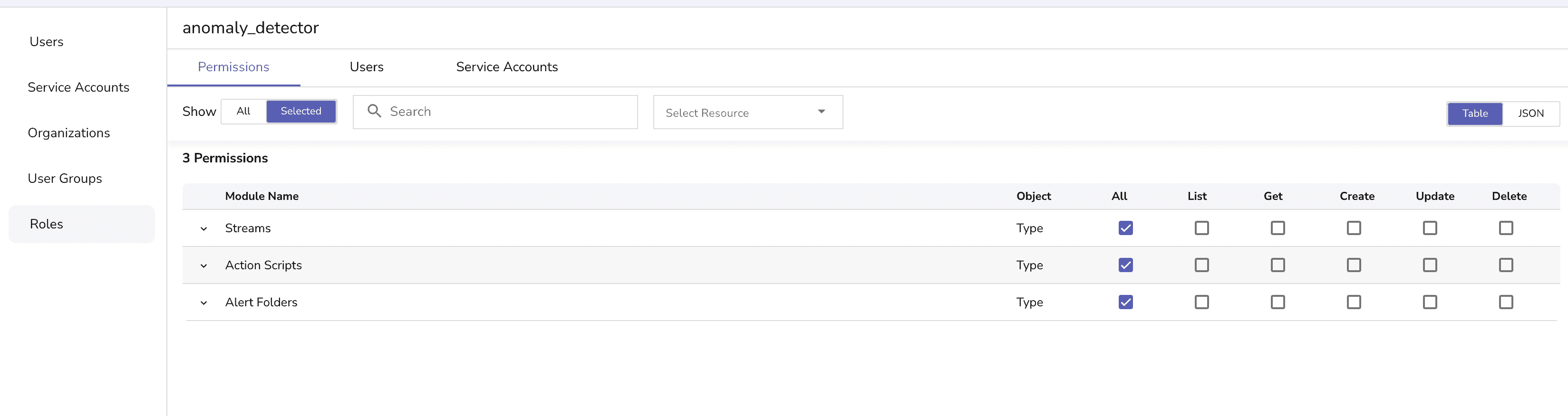
2. Assign a role (`anomaly_detector`) with Stream, Action Scripts, and Alert Folder permissions
3. Attach the service account to the role
!
---
### Step 2: Configuration and Environment Setup
Configure credentials in a `.env` file for secure **real-time anomaly detection using OpenObserve**:
```env
ORIGIN_CLUSTER_URL=https://your-cluster.openobserve.ai
ORIGIN_CLUSTER_TOKEN=your_base64_encoded_service_account_token
OPENOBSERVE_ORG=your_organization_name
```
*Best Practice: Add `.env` to `.gitignore` and rotate tokens regularly for security.*
---
### Step 3: Training the Anomaly Detection Model
Train a robust **machine learning anomaly detection** model with these steps:
- Extract 24+ hours of high-quality, gap-free data
- Normalize features and create sliding windows
- Fit the **Random Cut Forest** model
- Set anomaly threshold (98th percentile)
- Validate and package the model
*Threshold Tip: Start at 98th percentile to balance sensitivity and reduce false positives.*
---
### Step 4: Deployment and Real-Time Inference
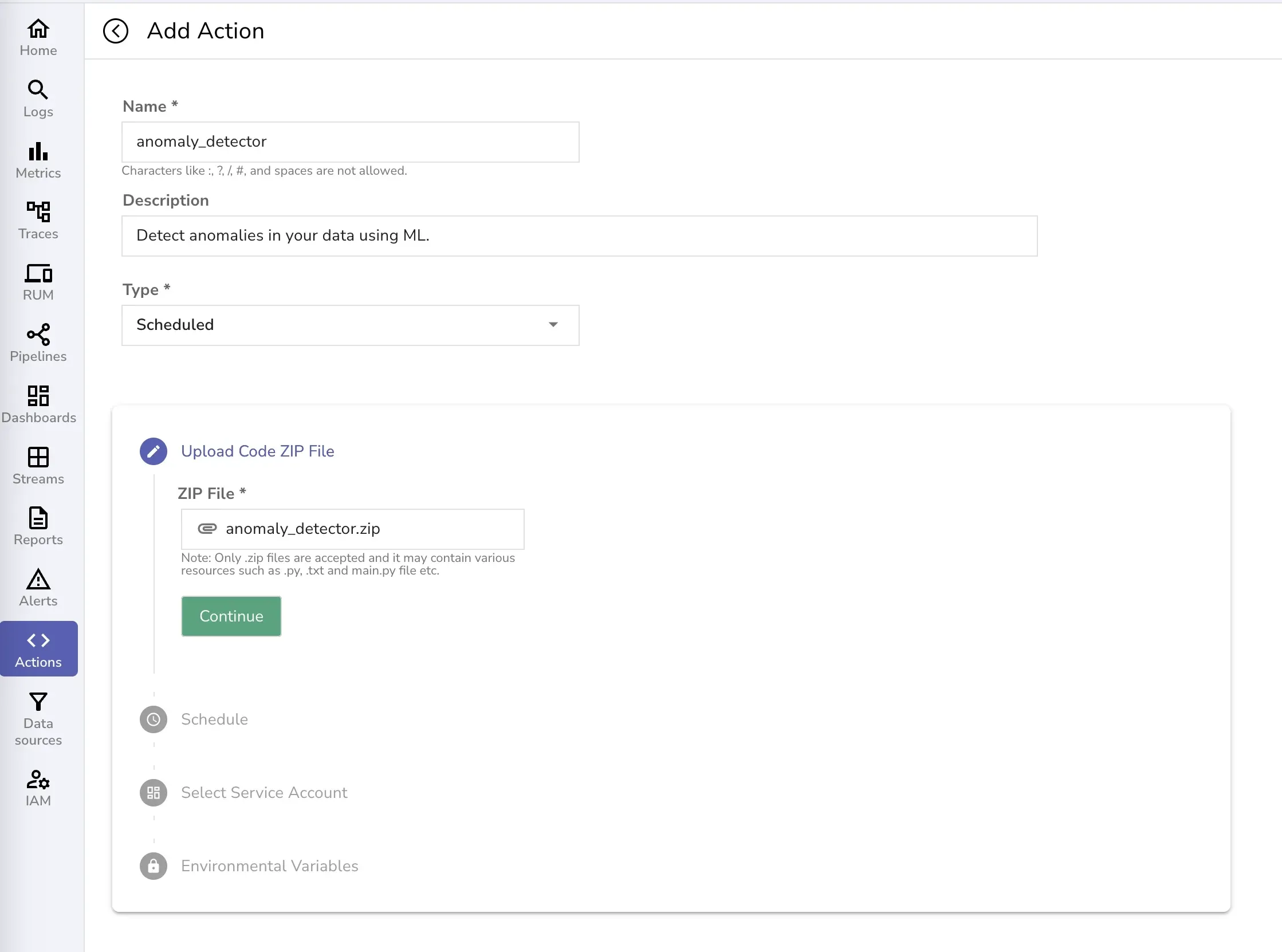
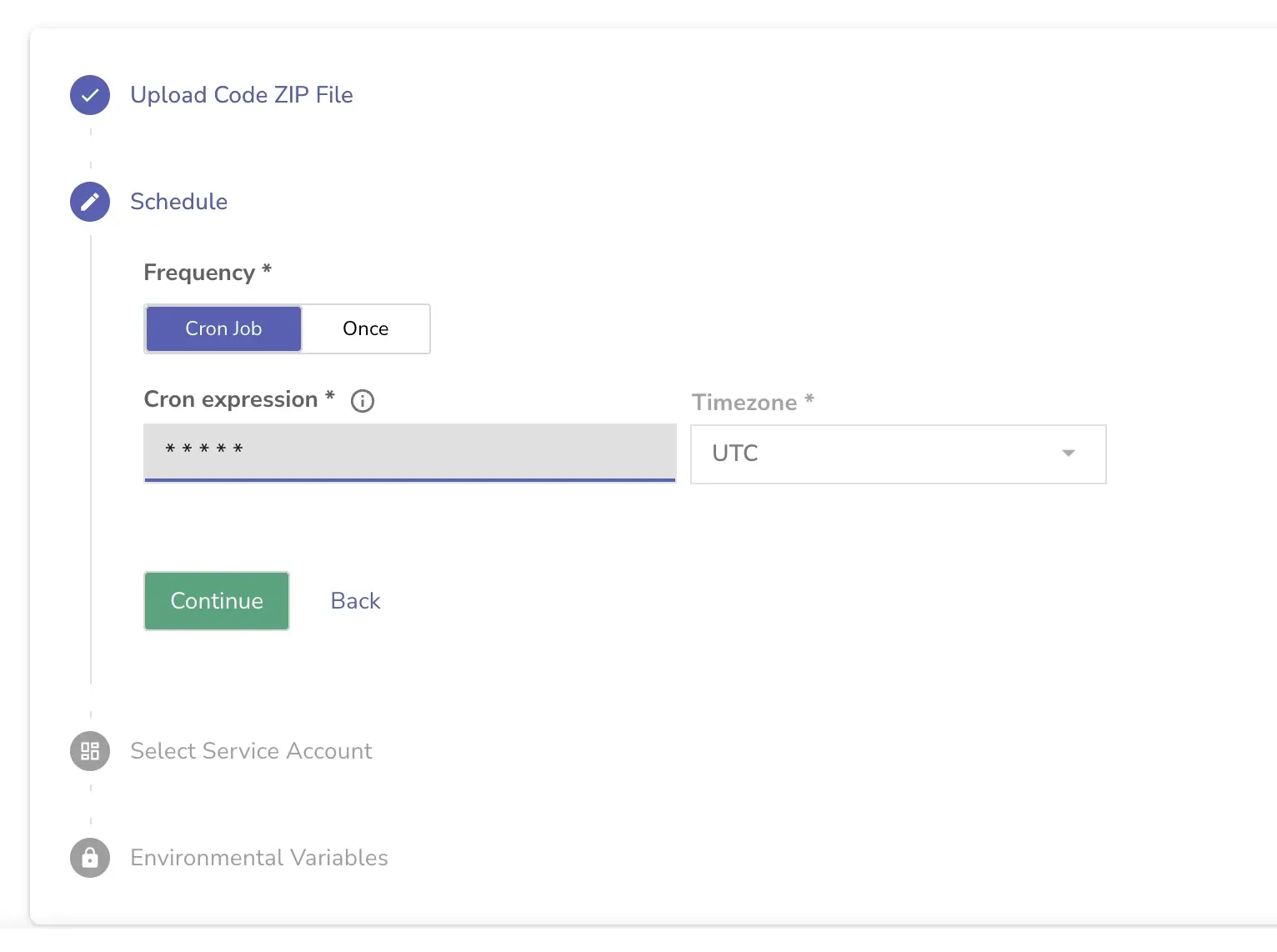
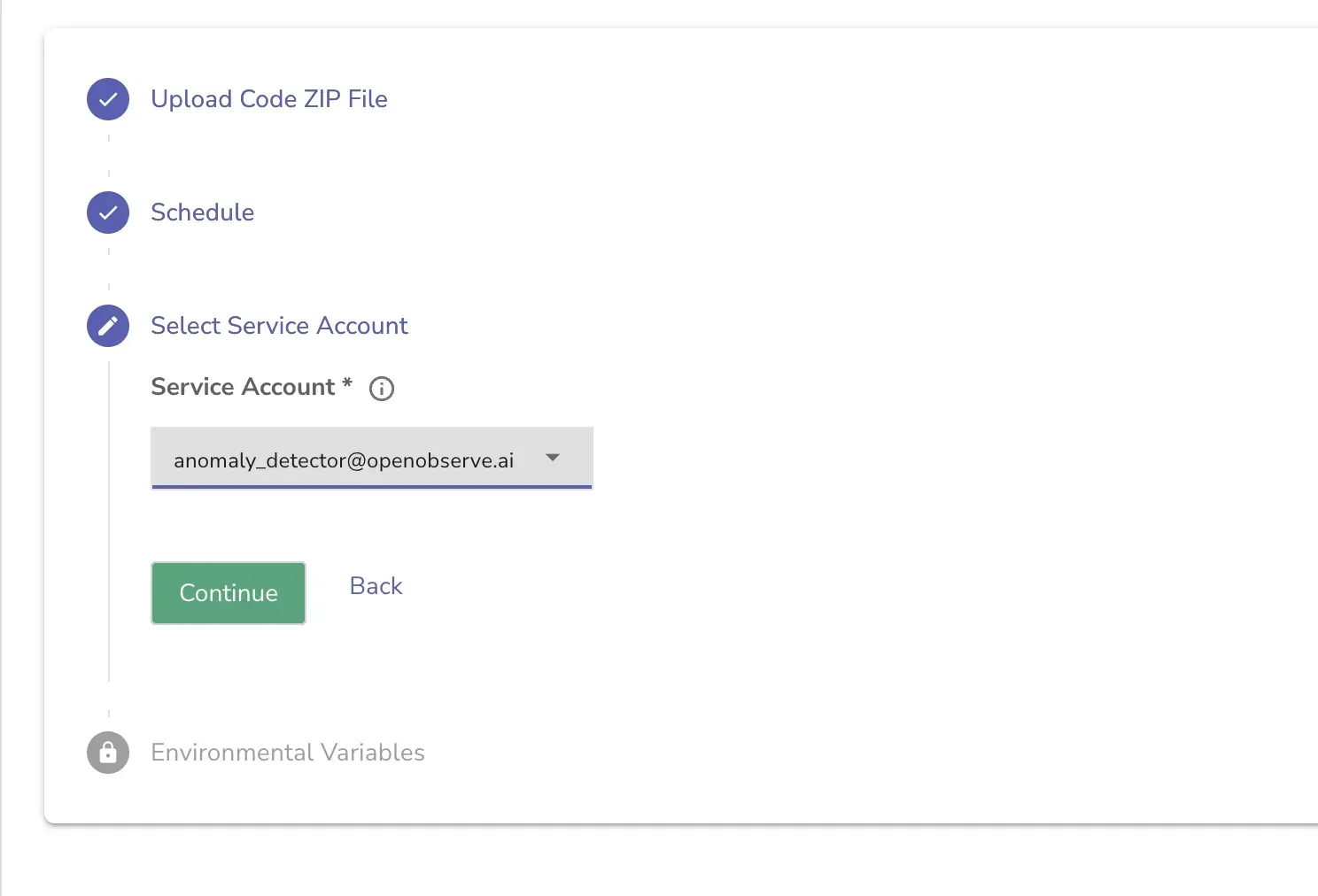
Deploy the model using `deploy.py` and `pack.sh` for scheduled actions in OpenObserve. Monitor streaming data every minute, flagging anomalies in a dedicated log stream.
---
### Step 5: Results, Visualization, and Alerts
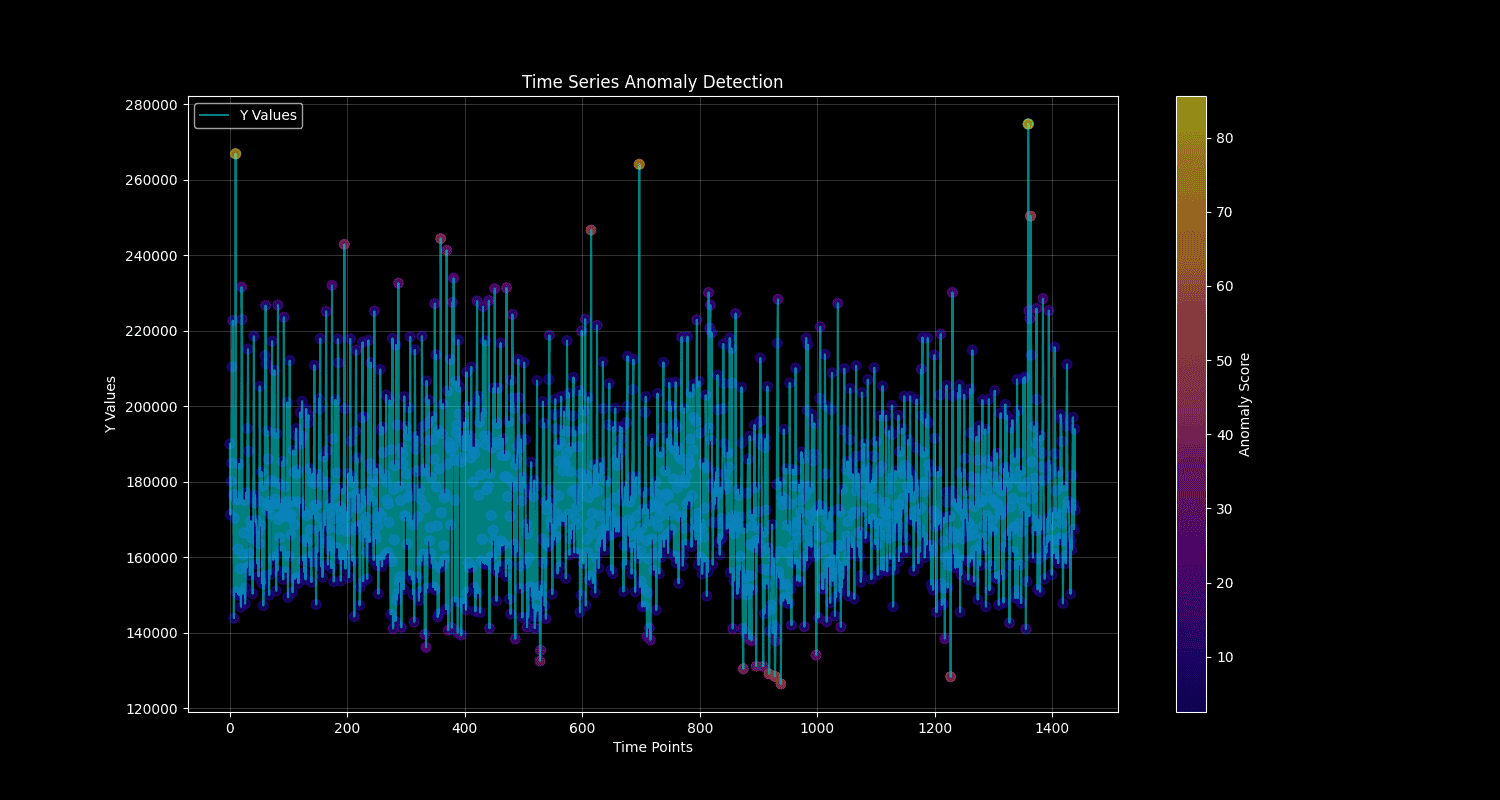
Post-deployment, visualize anomalies in **time series data**:

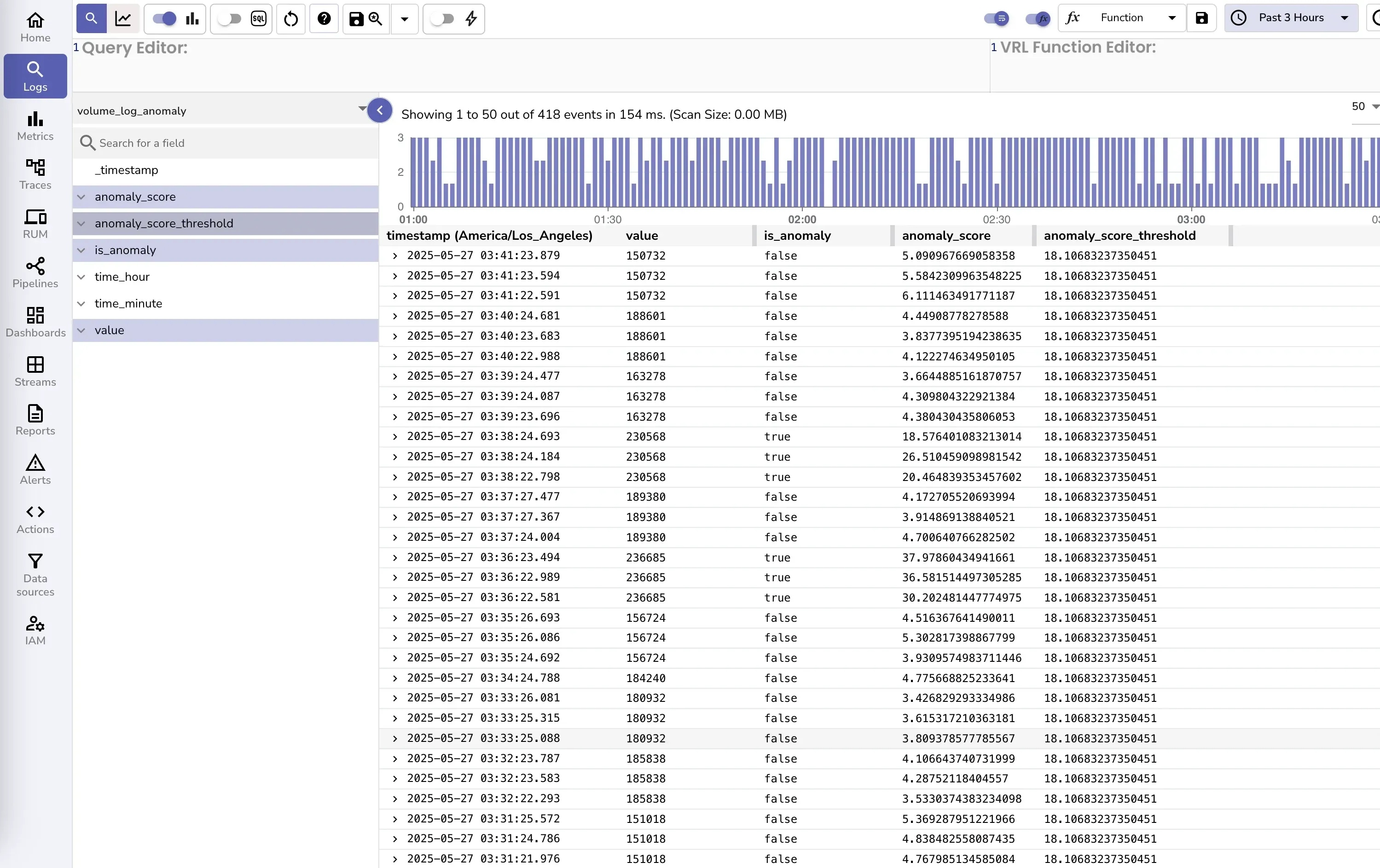
Values exceeding the threshold (~230,000 events/minute) are flagged (`is_anomaly=true`) and trigger real-time anomaly detection alerts.
---
## Troubleshooting Anomaly Detection Systems
Address common anomaly detection challenges in time series:
- **All points flagged as anomalies**: Ensure sufficient normal data in training.
- **High false positives**: Adjust threshold to 99th percentile.
- **Deployment failures**: Verify service account permissions and API endpoints.
*Tip: Regularly retrain models to adapt to concept drift for **cost-effective anomaly detection solutions**.*
---
## Conclusion
Implementing real-time anomaly detection with OpenObserve and Random Cut Forest offers scalable, intelligent monitoring for time series data. This approach ensures flexibility, actionable alerts, and minimal manual tuning. Start with our Random Cut Forest implementation guide, monitor performance, and refine thresholds for optimal results in your observability stack.
---
## FAQs about Real-Time Anomaly Detection Systems
**Q1: What is real-time anomaly detection in machine learning?**
A: It’s the use of algorithms like Random Cut Forest to detect outliers in streaming or time series data instantly, ideal for monitoring and security.
**Q2: How does time series anomaly detection work?**
A: It models normal trends in time-based data, flagging deviations using statistical or machine learning methods like Random Cut Forest for time series data.
**Q3: Can I implement anomaly detection in Python with OpenObserve?**
A: Yes, Python libraries (e.g., scikit-learn, PyOD) integrate with OpenObserve for custom real-time anomaly detection using OpenObserve.
**Q4: Is Random Cut Forest better than statistical methods?**
A: RCF excels in real-time anomaly detection for high-dimensional, streaming data, offering greater flexibility than statistical methods.
**Q5: What are common challenges in anomaly detection systems?**
A: Issues like false positives or concept drift require careful threshold tuning and regular retraining for troubleshooting anomaly detection systems.