
Frontend Observability
OpenObserve provides robust frontend observability tools that help monitor user experience, track performance metrics, and capture errors in web applications. With minimal overhead, you can gain deep visibility into how users interact with your frontend—ensuring smooth performance across devices and browsers.
Overview
Frontend Observability in OpenObserve enables real user monitoring, performance tracking (including Core Web Vitals), JavaScript error capture, and session replay. These tools are optimized for modern frontend architectures and come with a lightweight SDK for easy integration.
Key Features
Real User Monitoring (RUM)
-
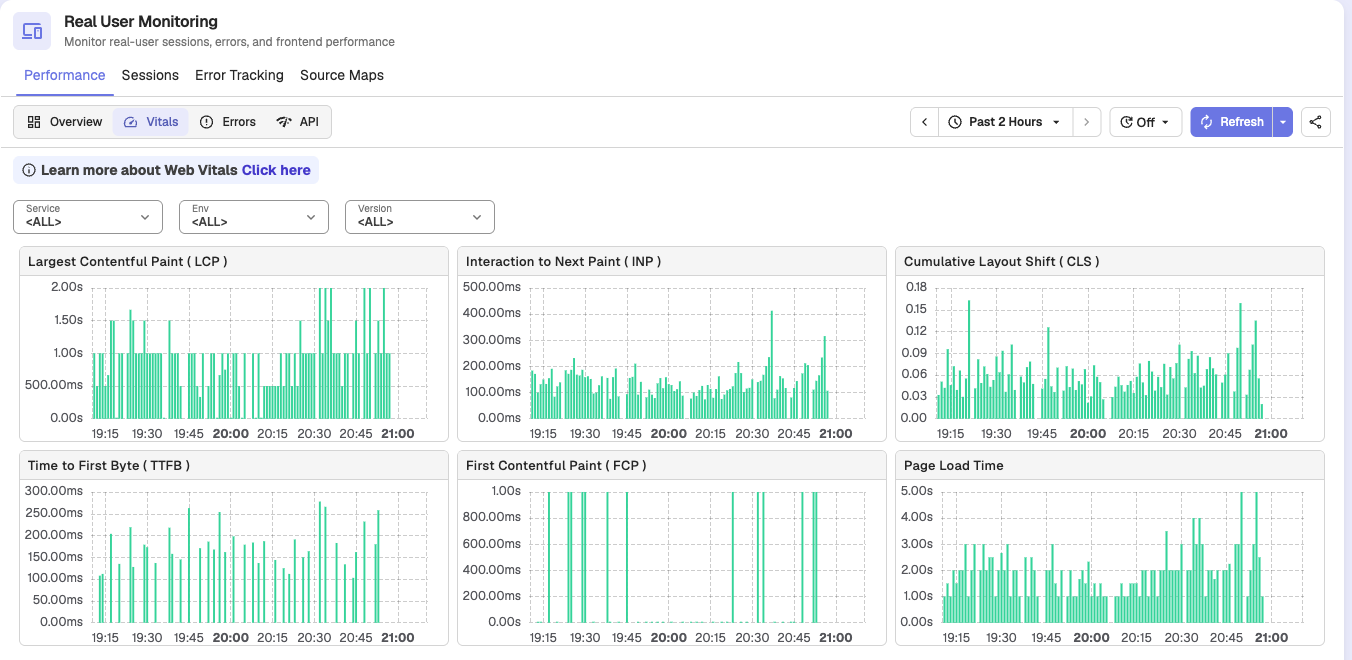
Page Load Performance: Track FCP, LCP, and other performance indicators
-
Web Vitals Monitoring: Automatically capture Google's Core Web Vitals
-
Geographic & Device Context: Analyze user experience by browser, device, and approximate location.
-
Network Insights: Track HTTP requests and network timing
Error Tracking
- JavaScript Errors: Automatically capture exceptions and errors with full stack traces
- Error Context: Includes user session metadata and browser details
- Source Maps: Upload source maps so minified stack traces show the original file and line. See Source Maps.
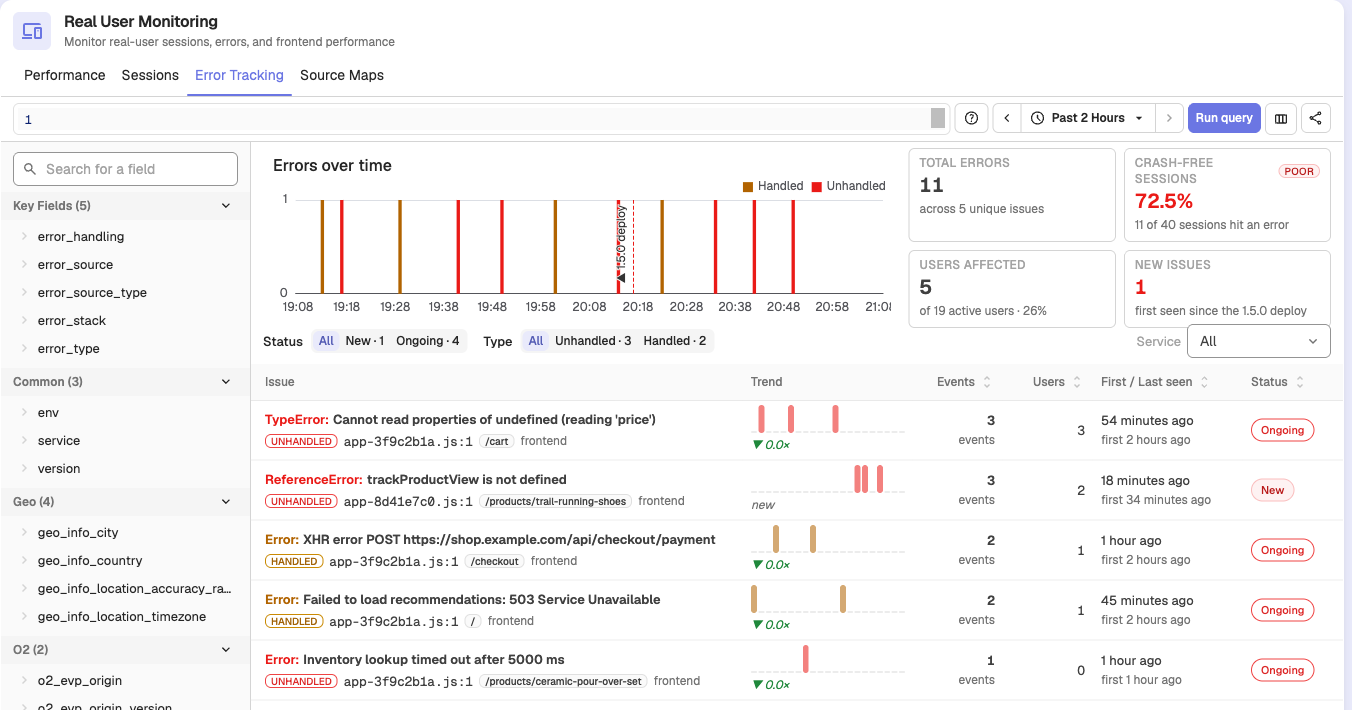
See Error Tracking for the full guide.
Session Replay
- User Interaction Recording: Replay user sessions to understand behavior and debug issues
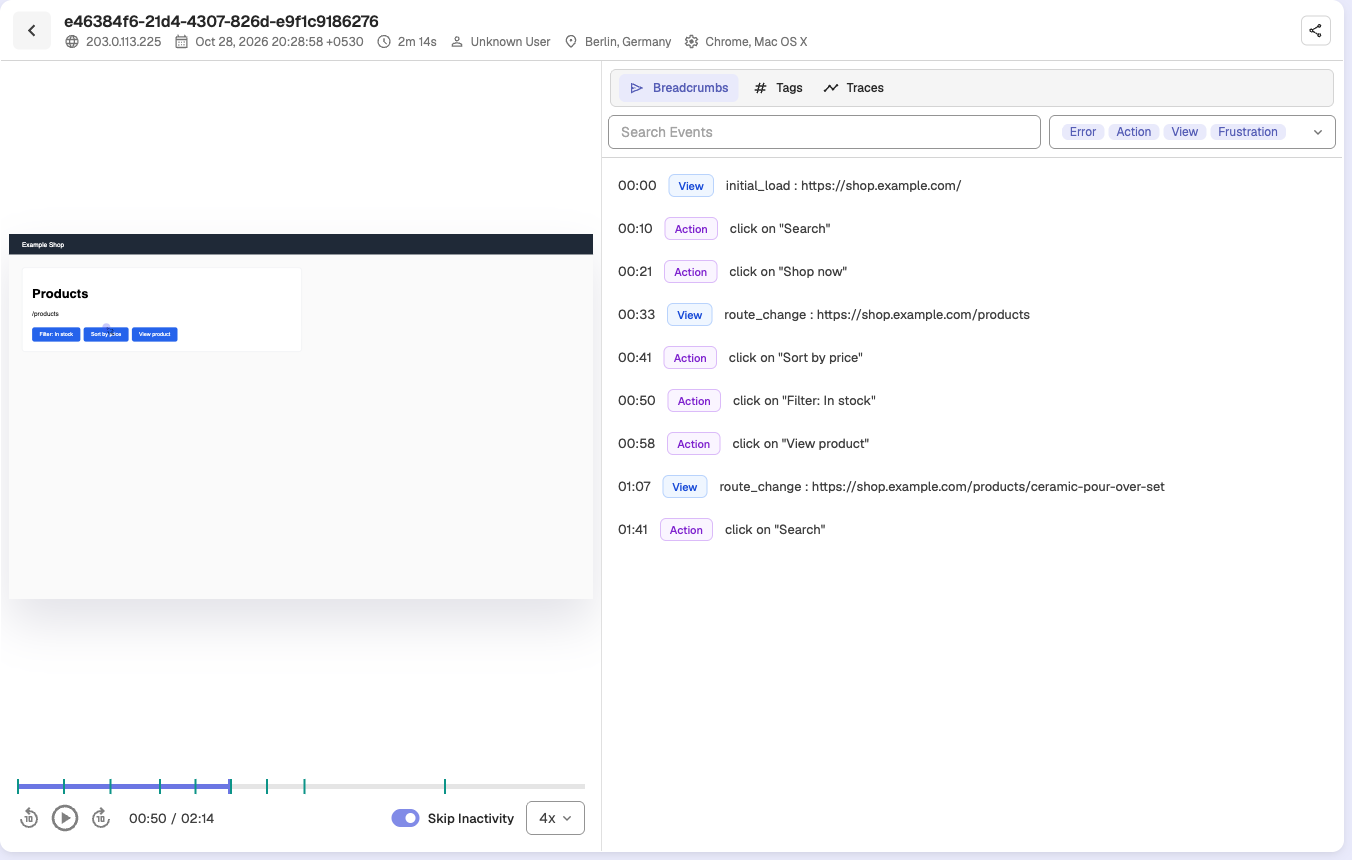
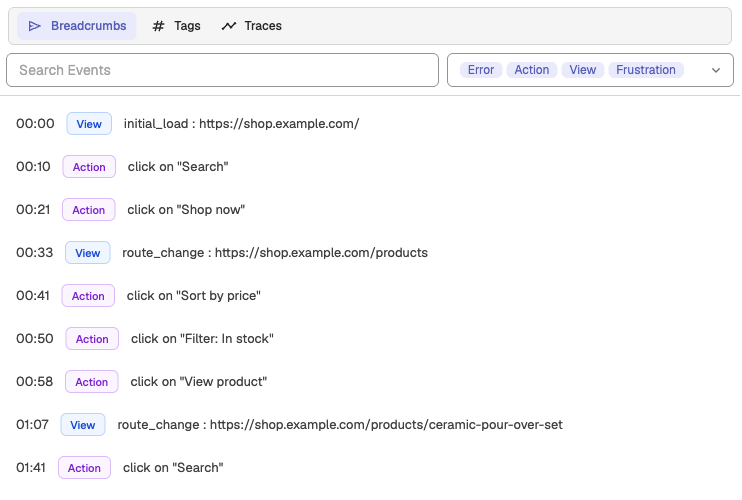
- Event Timeline: View DOM changes, clicks, inputs, and navigation in order
- Privacy Features: Configurable masking for sensitive fields
See Session Replay for the full guide.
Product Analytics
- Product Analytics (beta): See what people use, where they drop off in funnels, and who comes back
Integration
Getting started with OpenObserve's RUM is straightforward. Add our JavaScript snippet to your application's entry point eg: index.js or main.js, and you'll begin collecting user experience data immediately.
In the UI, go to RUM to find the Performance, Sessions, Error Tracking and Source Maps tabs.
Distributed Tracing
Track requests across microservices: OpenTelemetry-native ingestion, waterfall and flame graph views, a service graph, and fast trace search.
Enterprise Features
OpenObserve Enterprise capabilities: extended retention, federated search, BYOB storage, SSO, RBAC, cipher keys, query and workload management, and audit trail.