Elasticsearch is a distributed, RESTful search and analytics engine built on Apache Lucene. It's the core component of the Elastic Stack (ELK - Elasticsearch, Logstash, Kibana) and has become the de facto standard for log analytics, full-text search, and real-time data indexing across countless organizations.
Known for its powerful search capabilities, horizontal scalability, and rich ecosystem, Elasticsearch excels at:
- Log analytics and centralized logging
- Full-text search for applications and e-commerce
- Infrastructure and application performance monitoring
- Security analytics (SIEM)
- Business intelligence and analytics
However, several critical factors are driving teams to evaluate alternatives:
- Infrastructure costs: Elasticsearch's memory-intensive architecture requires substantial hardware resources, leading to high operational expenses
- Operational complexity: Managing Elasticsearch clusters demands specialized expertise in shard optimization, heap tuning, and cluster management
- Storage expenses: At scale, full-fidelity data retention becomes prohibitively expensive without aggressive retention policies
- Licensing concerns: The 2021 shift from Apache 2.0 to the Server Side Public License (SSPL) created uncertainty for many organizations
- Resource requirements: JVM-based architecture can lead to performance bottlenecks and higher compute costs
In this guide, we'll explore ten powerful alternatives that address these concerns, from open-source platforms optimized for cost savings to specialized solutions for specific use cases.
Jump to comparison table to see the overview of different tools and their capabilities.
Why Teams Are Seeking Elasticsearch Alternatives
Organizations are increasingly exploring alternatives to Elasticsearch for several compelling reasons:
Cost Optimization at Scale
Evidence from real-world migrations:
- Storage costs: 60-140x reduction - Modern columnar storage alternatives deliver dramatic savings
- Infrastructure requirements - Elasticsearch's JVM heap management and memory overhead can consume 50-70% of available RAM
- Operational expenses - Managing shards, replicas, and cluster health requires dedicated DevOps resources
- Hidden costs - EBS volumes, cross-zone data transfer, and monitoring infrastructure add up quickly
Operational Complexity
Elasticsearch's power comes with significant operational burden:
- Cluster management - Shard allocation, replica configuration, and index optimization require expertise
- Memory tuning - JVM heap sizing, garbage collection tuning, and circuit breaker thresholds need constant attention
- Index mapping - Schema changes and mapping explosions can cause cluster instability
- Version upgrades - Major version migrations require careful planning and extensive testing
Performance at Scale
While Elasticsearch performs well for many workloads, limitations emerge:
- Aggregation queries - Memory-intensive aggregations can impact cluster performance
- High-cardinality data - Fields with millions of unique values strain inverted indexes
- Real-time ingestion - Maintaining low indexing latency while serving queries requires careful resource balancing
- Write-heavy workloads - Frequent updates and deletes trigger segment merging overhead
Licensing and Vendor Lock-in
The 2021 licensing change created industry uncertainty:
- SSPL restrictions - Organizations questioned the implications for SaaS deployments
- Ecosystem fragmentation - The community split between Elasticsearch and OpenSearch
- Feature gating - Advanced capabilities increasingly restricted to paid Elastic Cloud
- Migration concerns - Proprietary features and Elasticsearch-specific APIs create switching costs
Data Sovereignty and Compliance
Regulated industries face unique challenges:
- Data residency requirements - Need for on-premises or specific geographic data storage
- Audit requirements - Compliance mandates for data retention and access logging
- Self-hosted control - Preference for infrastructure managed entirely in-house
- Vendor-neutral standards - Desire to avoid dependence on proprietary formats
What to Look for in an Elasticsearch Alternative
When evaluating Elasticsearch alternatives in 2026, assess these critical dimensions:
| Criterion |
Why It Matters |
What to Evaluate |
How to Test |
| Search Capabilities |
Core functionality replacement |
• Full-text search quality• Query language flexibility• Relevance tuning options• Faceted search support |
Run production queries; test relevance with real data |
| Cost Structure |
Budget predictability and scale economics |
• Transparent pricing model• Storage costs per GB• Compute requirements• Hidden fees assessment |
Model costs at 2x, 5x, 10x current data volume |
| Performance |
Query speed and throughput |
• Query response times• Indexing throughput• Concurrent query handling• Resource efficiency |
Benchmark with production-scale data and query patterns |
| Storage Efficiency |
Long-term data retention costs |
• Compression ratios• Storage format (row vs columnar)• Cold storage options |
Test with real log data compression |
| Operational Simplicity |
Reduced management overhead |
• Cluster setup complexity• Tuning requirements• Auto-scaling capabilities• Monitoring overhead |
Simulate failure scenarios; measure admin time required |
| Query Language |
Team productivity and learning curve |
• SQL support• Elasticsearch DSL compatibility• Proprietary query syntax• Query builder tools |
Developers attempt common queries without documentation |
| Integration Ecosystem |
Compatibility with existing tools |
• Log shippers (Filebeat, Fluentd)• Visualization tools (Kibana, Grafana)• OpenTelemetry support• API compatibility |
Test critical integrations in staging environment |
| Scalability |
Growth accommodation |
• Horizontal scaling model• Stateful vs stateless architecture• Multi-tenancy support• Disaster recovery (RPO/RTO) |
Run load tests; simulate node failures |
| Feature Completeness |
Avoiding tool sprawl |
• Logs, metrics, traces in one platform• Alerting capabilities• Dashboard/visualization tools• Real User Monitoring (RUM) |
Map current Elastic Stack features to alternatives |
| Migration Path |
Time and risk to adopt |
• Data migration tools• API compatibility layer• Gradual migration support• Rollback capabilities |
Pilot migration with non-critical workload |
Top 10 Elasticsearch Alternatives: Detailed Comparison
Jump to comparison table to see the overview of different tools and their capabilities.
1. OpenObserve
OpenObserve is the #1 open-source Elasticsearch alternative for teams seeking unified observability without the complexity, cost, or operational overhead of traditional solutions. It delivers 140x lower storage costs through columnar compression while providing Elasticsearch-compatible APIs and familiar SQL querying.
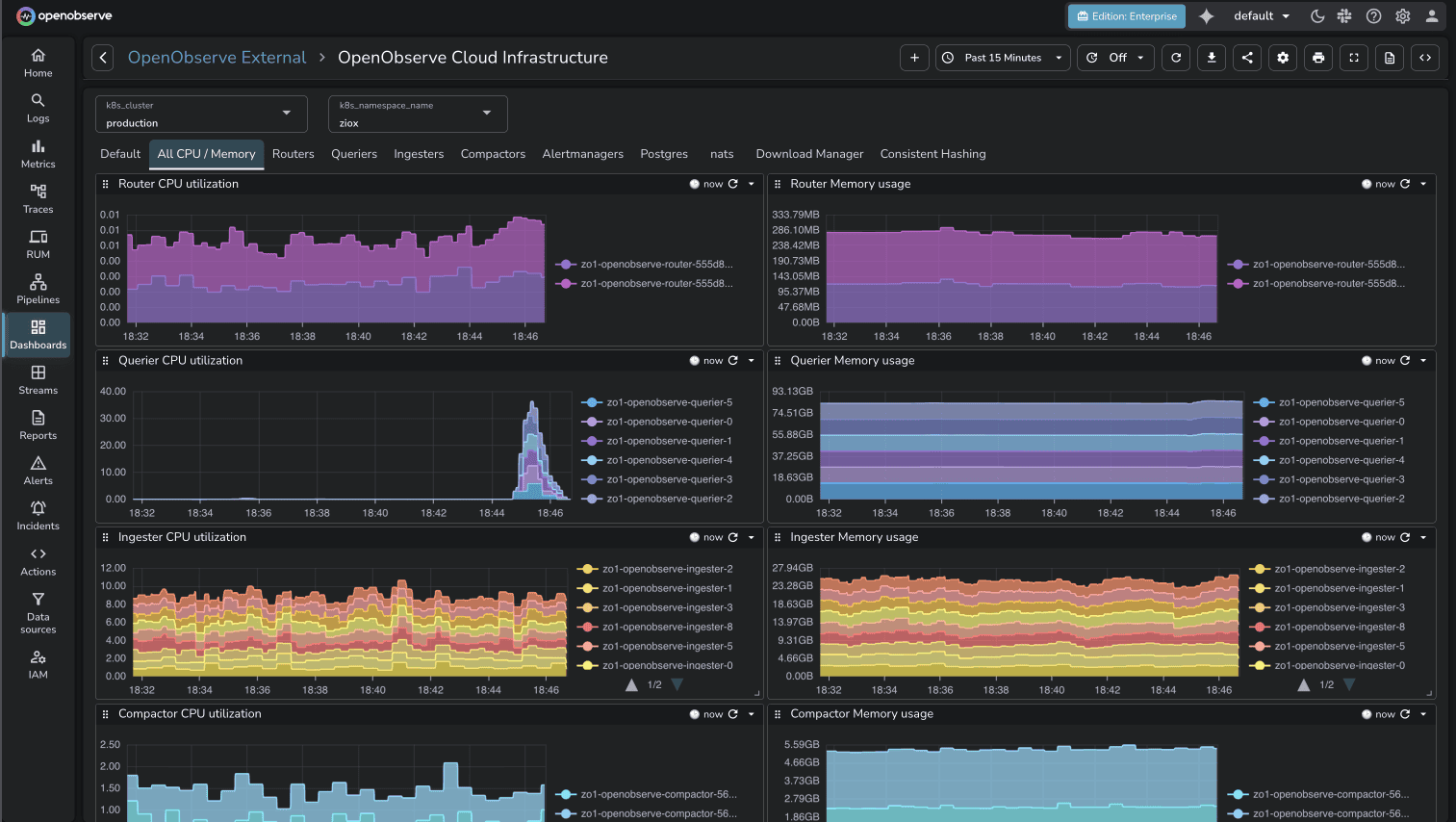
OpenObserve Pros:
- Massive Cost Reduction: 140x compression and columnar storage (Parquet) drastically lower storage costs vs Elasticsearch
- SQL Instead of DSL: Query logs with familiar SQL rather than complex Elasticsearch Query DSL
- Unified Observability: Logs, metrics, traces, RUM, and session replay in one platform (no need for separate ELK stack components)
- Stateless Architecture: Easy horizontal scaling without data replication concerns or complex shard management
- Performance: Built in Rust with DataFusion query engine - faster aggregation queries than Elasticsearch
- OpenTelemetry-Native: Seamless integration with modern instrumentation standards
- Flexible Storage: Bring your own S3, GCS, Azure Blob, or MinIO - no vendor lock-in
- No Index Mapping Headaches: Schema-on-read eliminates mapping explosion problems
- Simple Deployment: Single binary for small setups; HA mode for production scale
OpenObserve Cons:
- Smaller community compared to Elasticsearch's decades-long ecosystem
- Some advanced Elasticsearch plugins may require custom development
- Newer product with evolving enterprise features
Integration / Migration:
- Elasticsearch compatibility layer enables gradual migration without changing log shippers
- Compatible with Filebeat, Fluentbit, Fluentd, Vector, and OpenTelemetry Collector
- Prebuilt dashboards and alerts ease transition from Kibana
- Can run alongside Elasticsearch during phased migration
- Complete migration guide available
Best For: Teams wanting dramatic cost savings, unified observability, and simplified operations without sacrificing search capabilities. Ideal for log analytics, APM, and infrastructure monitoring at any scale.
Real-World Evidence:
- 140x storage reduction compared to Elasticsearch with real production log data
- 4x fewer resources required for equivalent query performance
- Sub-second aggregation queries on billions of log records
- Used by organizations processing petabytes of observability data monthly
2. OpenSearch
OpenSearch is the open-source fork of Elasticsearch 7.10.2, created by AWS and the community after Elastic's 2021 license change. It maintains near-complete compatibility with Elasticsearch while remaining under the permissive Apache 2.0 license.
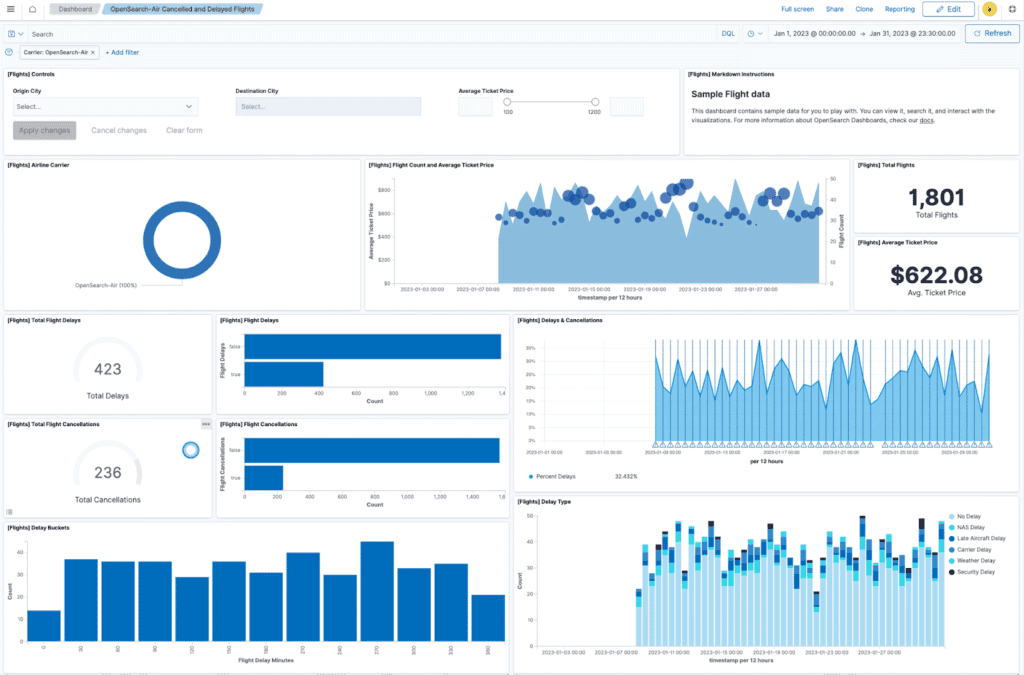
OpenSearch Pros:
- True Open Source: Apache 2.0 license ensures long-term freedom from vendor restrictions
- Elasticsearch Compatible: Drop-in replacement for Elasticsearch 7.x deployments
- Feature Parity: OpenSearch Dashboards provides Kibana-like visualization capabilities
- Strong Community: Backed by AWS, community-driven governance model
- Enterprise Features: Built-in security, alerting, anomaly detection, and SQL support
- Managed Option: AWS OpenSearch Service offers fully managed deployment
- Active Development: Regular releases with performance improvements and new features
- Ecosystem Continuity: Works with existing Elasticsearch plugins and integrations
OpenSearch Cons:
- Still inherits Elasticsearch's operational complexity (shard management, heap tuning)
- High storage costs similar to Elasticsearch (no columnar compression)
- Memory-intensive architecture requires substantial infrastructure
- Dashboards less polished than Kibana's latest versions
- Requires separate components for full observability (metrics, traces)
Integration / Migration:
- Seamless Elasticsearch 7.x migration - minimal changes required
- Compatible with all Elasticsearch log shippers and clients
- OpenSearch Dashboards replaces Kibana with similar interface
- AWS Data Prepper for log/trace transformation
- OpenTelemetry support for metrics and traces
Best For: Organizations seeking an open-source Elasticsearch alternative with strong compatibility guarantees and the backing of AWS. Ideal for teams currently on Elasticsearch 7.x looking to avoid SSPL licensing concerns.
Migration Path: OpenSearch provides tools and documentation for migrating from Elasticsearch, including reindex APIs and snapshot/restore capabilities.
3. Apache Solr
Apache Solr is a mature, battle-tested search platform built on Apache Lucene (same foundation as Elasticsearch). It's been powering enterprise search since 2006 and offers advanced features for complex search applications.
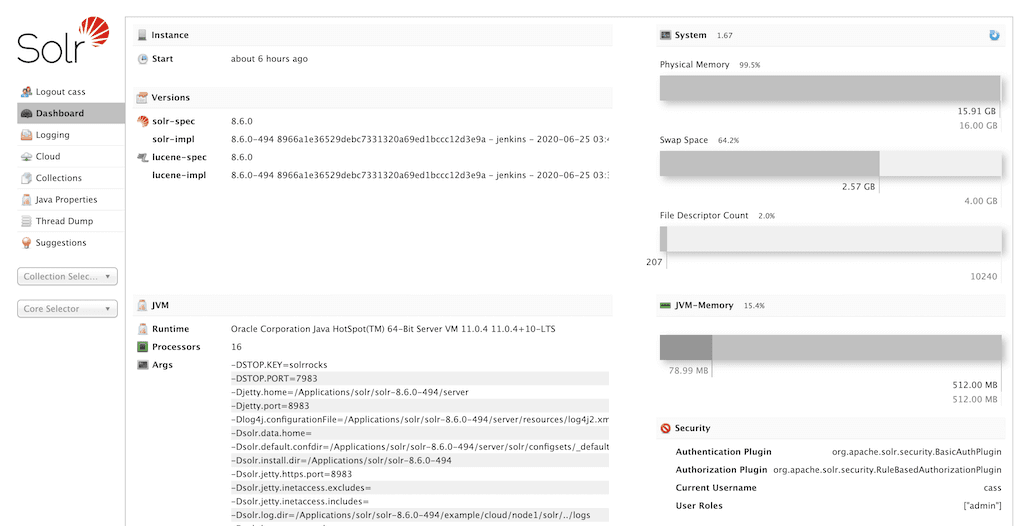
Apache Solr Pros:
- Mature and Stable: 18+ years of production use across thousands of organizations
- Advanced Search Features: Faceting, highlighting, spell-check, auto-suggest, geospatial search
- True Open Source: Apache 2.0 licensed with strong community governance
- Flexible Deployment: Standalone, SolrCloud (distributed), embedded modes
- Rich Query Language: Supports Lucene query syntax and dismax query parsers
- Integration Options: REST API, XML/JSON/CSV formats, extensive client libraries
- Document-Centric: Excellent for content management and e-commerce search
- NoSQL Features: Can function as a distributed NoSQL database
Apache Solr Cons:
- Steeper learning curve than modern alternatives
- Less focused on log analytics (better suited for structured documents)
- SolrCloud setup and management can be complex
- Smaller ecosystem compared to Elasticsearch
- UI feels dated compared to modern tools
- Not designed for unified observability (logs + metrics + traces)
Integration / Migration:
- Data Import Handler for ETL from databases
- Compatible with NiFi, Flume for log ingestion
- Can coexist with Elasticsearch during transition
- Rich REST API enables custom integration
Best For: Organizations with complex search requirements for structured documents, e-commerce product catalogs, or content management systems. Not ideal as a primary log analytics platform.
4. ClickHouse
ClickHouse is an open-source columnar database designed for OLAP (online analytical processing) workloads. While not a traditional search engine, it excels at log analytics with incredible query speed and storage efficiency.
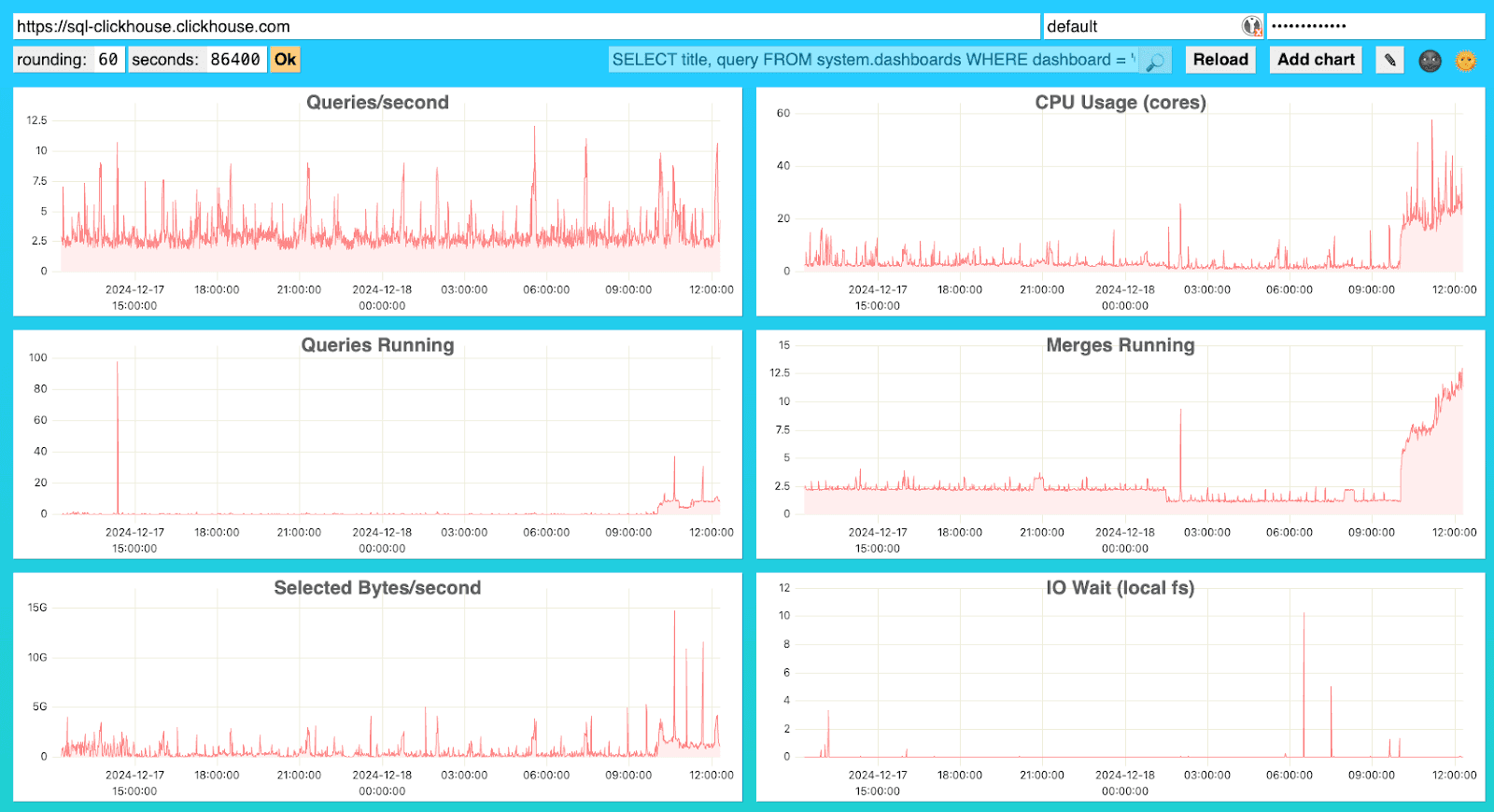
ClickHouse Pros:
- Blazing Fast Analytics: 100-1000x faster than row-based systems for aggregation queries
- Incredible Compression: 10-100x compression ratios reduce storage costs dramatically
- Columnar Storage: Optimized for analytical queries over large datasets
- SQL Support: Standard SQL interface accessible to analysts and developers
- Linear Scalability: Add nodes to scale throughput and storage independently
- Low Resource Usage: Efficient memory and CPU utilization compared to Elasticsearch
- Real-Time Ingestion: Handles millions of inserts per second
- Cost-Effective: Dramatically lower infrastructure costs for log analytics
ClickHouse Cons:
- Not designed for full-text search (use tantivy/Postgres FTS for that use case)
- Requires separate tooling for visualization (Grafana, Superset)
- No built-in alerting (needs integration with external systems)
- Schema management required (not schemaless like Elasticsearch)
- Limited ecosystem compared to Elasticsearch
Integration / Migration:
- ClickHouse can ingest from Kafka, vector, Fluent Bit
- Grafana provides excellent visualization layer
- Used as storage backend by many observability platforms (including Better Stack)
- Requires more upfront data modeling than Elasticsearch
Best For: Teams prioritizing analytical query performance over full-text search. Excellent for metrics, log aggregation, and time-series data. Often paired with other tools for complete observability.
5. Splunk
Splunk is the enterprise-grade leader in log management and SIEM (Security Information and Event Management). While expensive, it offers unmatched features for security operations and complex analytics.
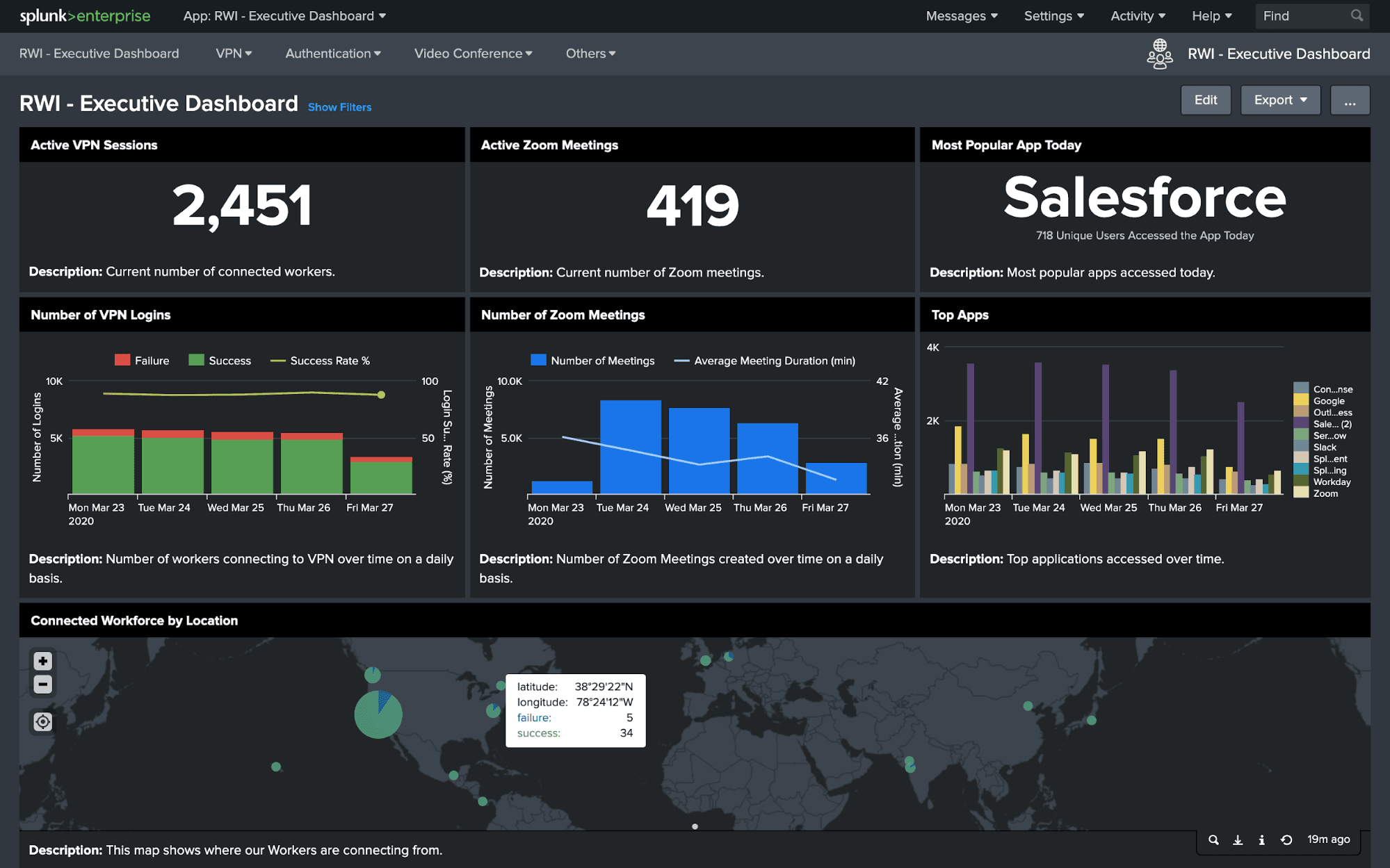
Splunk Pros:
- Powerful SPL (Search Processing Language): Expressive query language for complex correlations
- Enterprise-Grade Security: Industry-leading SIEM capabilities
- Extensive App Ecosystem: 2000+ pre-built integrations and apps
- Advanced ML/AI: Built-in machine learning for anomaly detection and predictions
- Compliance Ready: SOC 2, HIPAA, PCI-DSS certified deployments
- Professional Services: World-class support and consulting
- Data Models: Acceleration and normalization for faster searches
- Real-Time Monitoring: Excellent for operations centers and NOCs
Splunk Cons:
- Very Expensive: Among the most costly platforms per GB ingested
- Licensing Complexity: Daily ingestion limits can lead to unexpected overages
- Resource Intensive: High infrastructure requirements
- Steep Learning Curve: SPL requires significant training
- Vendor Lock-In: Proprietary format and query language create switching costs
Integration / Migration:
- Universal Forwarders collect data from any source
- REST API and SDKs for custom integration
- Splunk Connect for Kubernetes
- OpenTelemetry support improving
Best For: Large enterprises with security-first requirements, complex compliance needs, or existing Splunk investments. Often used alongside lighter-weight tools for cost-sensitive workloads.
6. Grafana Loki
Grafana Loki is a horizontally scalable, highly available log aggregation system designed to be cost-effective and simple. Unlike Elasticsearch, Loki doesn't index log contents—only metadata labels.
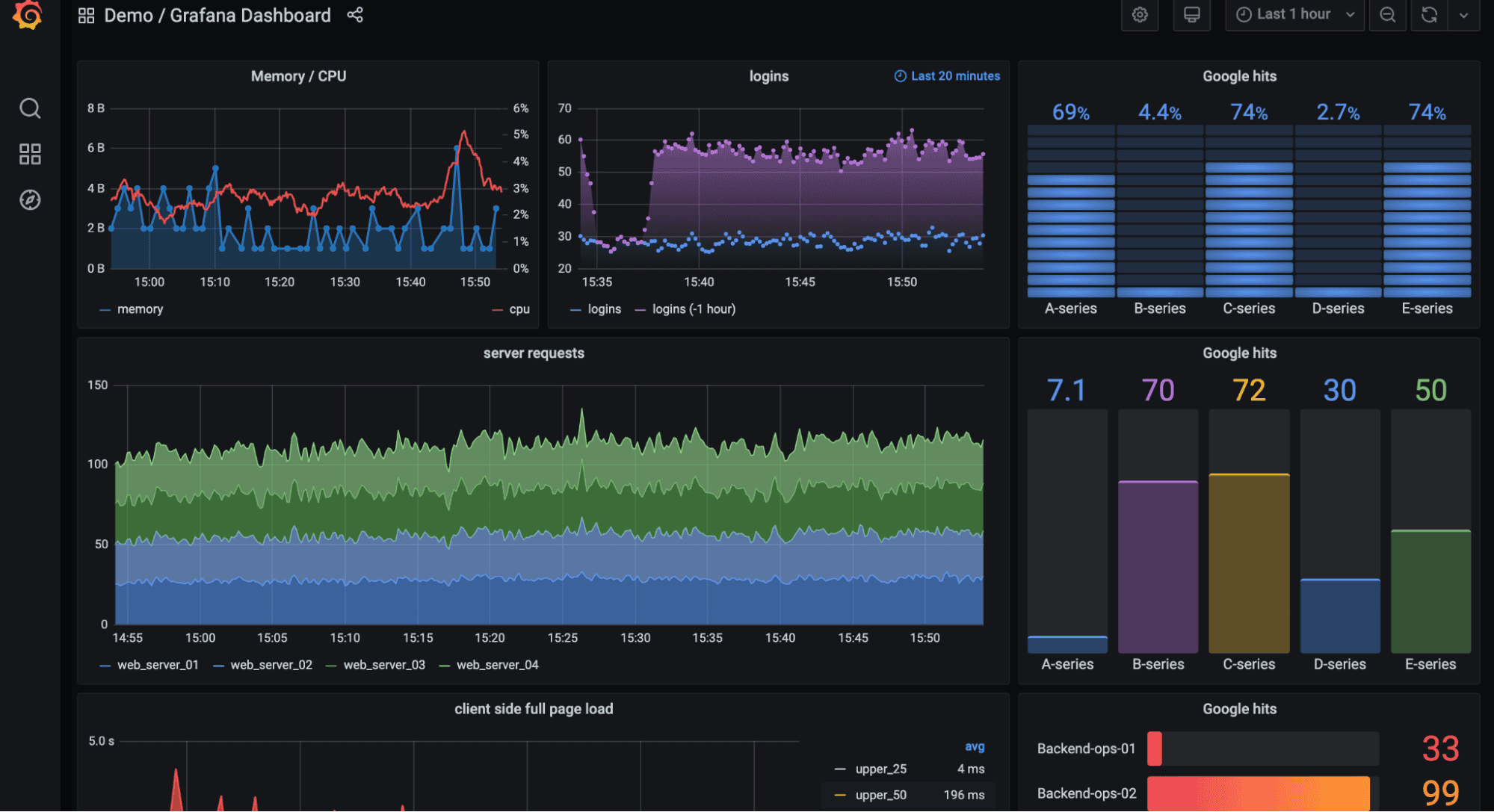
Grafana Loki Pros:
- Cost-Effective Storage: Stores logs compressed without full-text indexing
- Simple to Operate: Fewer moving parts than Elasticsearch clusters
- Grafana Integration: Native integration with Grafana dashboards
- LogQL Query Language: Similar to PromQL, familiar to Prometheus users
- Label-Based Indexing: Efficient for structured log queries
- Horizontal Scalability: Cloud-native architecture scales easily
- Multi-Tenancy: Built-in support for isolated tenants
- Object Storage: Uses S3/GCS for cost-effective long-term storage
Grafana Loki Cons:
- Limited Full-Text Search: Not designed for arbitrary text searches across log contents
- Query Performance: Slower than Elasticsearch for ad-hoc free-text searches
- Label Strategy Critical: Poor label design impacts performance significantly
- Missing Features: No built-in alerting or dashboards (requires Grafana)
- Ecosystem Size: Smaller community and fewer integrations than Elasticsearch
Integration / Migration:
- Promtail, Fluentbit, Fluentd for log collection
- Native Grafana integration for visualization
- Works alongside Prometheus and Tempo for unified observability
- Grafana Cloud offers managed Loki
Best For: Teams already using Grafana for visualization, Kubernetes environments, or organizations wanting simpler operations than Elasticsearch. Best paired with Prometheus for metrics.
7. Meilisearch
Meilisearch is an open-source, lightning-fast search engine designed for instant search-as-you-type experiences in applications. It prioritizes developer experience and end-user relevance.
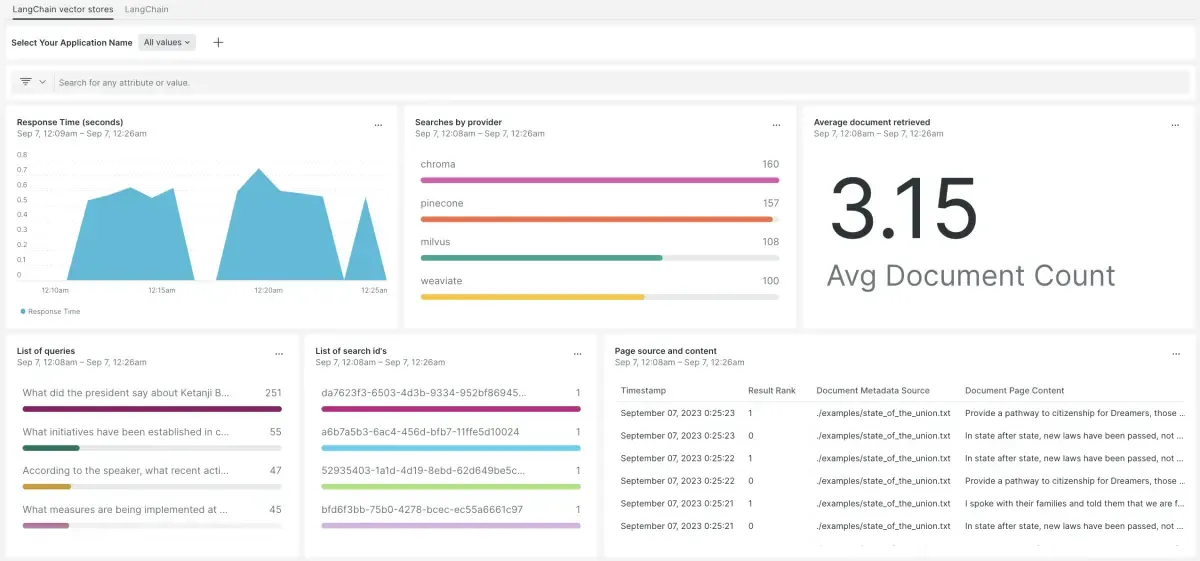
Meilisearch Pros:
- Blazing Fast: Sub-50ms search responses even with large datasets
- Typo Tolerant: Built-in fuzzy search handles user typing errors
- Easy to Deploy: Single binary, Docker image, or cloud service
- Developer-Friendly: Simple REST API and excellent documentation
- Relevance Tuning: Customizable ranking rules out of the box
- Instant Search: Optimized for search-as-you-type experiences
- Filters & Facets: Support for complex filtering and faceted search
- Multi-Language: Excellent support for international text
Meilisearch Cons:
- Not for Log Analytics: Designed for application search, not log management
- Limited Scale: Not designed for petabyte-scale data like Elasticsearch
- No Built-in Analytics: Lacks Elasticsearch's aggregation capabilities
- Smaller Ecosystem: Fewer integrations than Elasticsearch
- Single-Tenant Focus: Multi-tenancy support is limited
Integration / Migration:
- REST API and official SDKs for major languages
- Instant-search libraries for React, Vue, Angular
- Can complement Elasticsearch for user-facing search
Best For: Application developers needing instant search for websites, e-commerce, documentation, or SaaS products. Not suitable as an Elasticsearch replacement for log analytics.
8. Typesense
Typesense is an open-source, typo-tolerant search engine optimized for instant search experiences. It's designed to be easier to set up and operate than Elasticsearch for application search use cases.
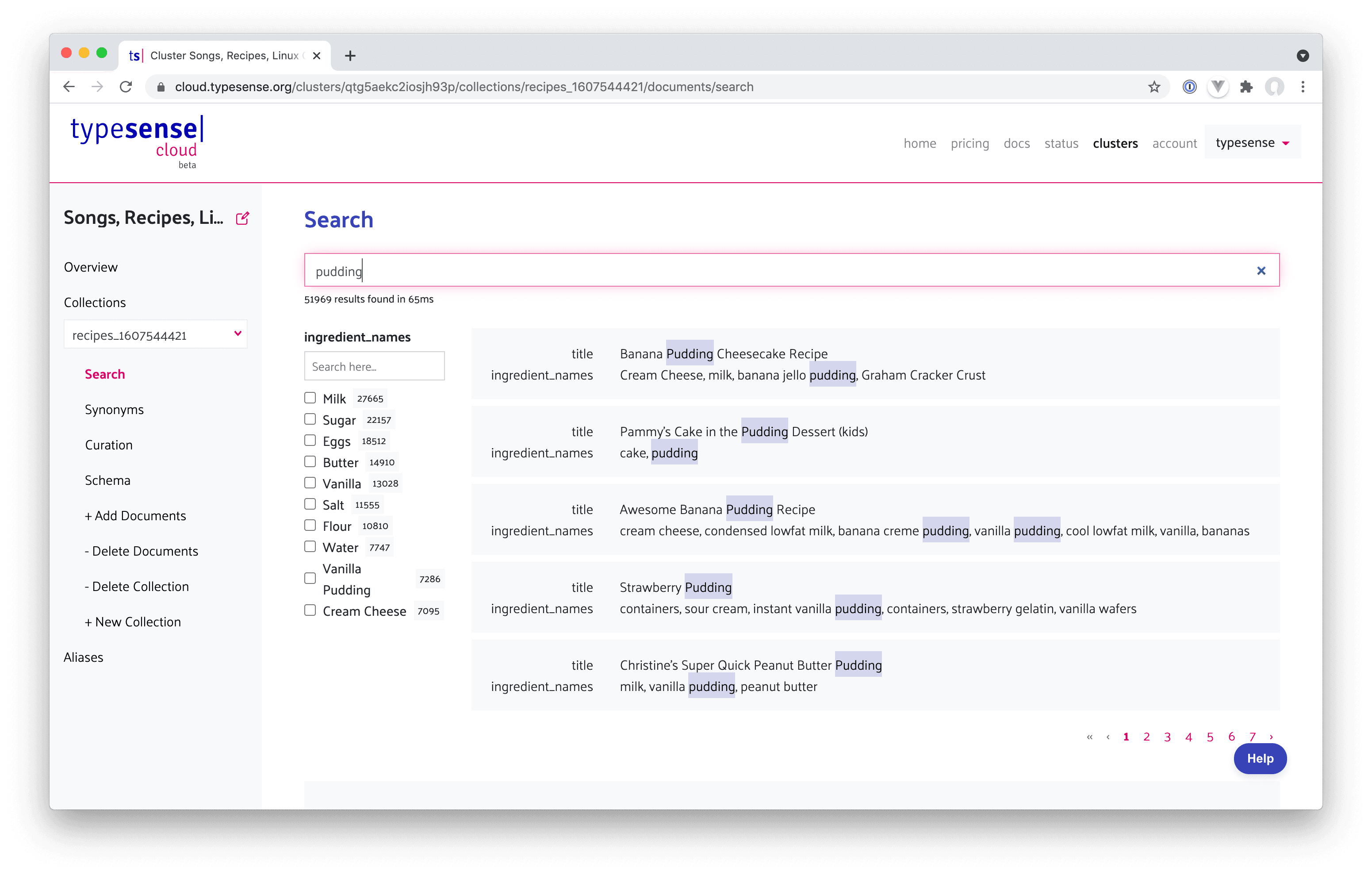
Typesense Pros:
- Simple Setup: Single binary deployment, running in minutes
- Fast Performance: Sub-50ms queries optimized for instant search
- Typo Tolerance: Intelligent fuzzy matching built-in
- Developer Experience: Intuitive API design and excellent docs
- Faceted Search: Rich filtering and faceting capabilities
- Geographic Search: Built-in support for location-based queries
- Tunable Relevance: Ranking and boosting with clear parameters
- Resource Efficient: Lower memory footprint than Elasticsearch
Typesense Cons:
- Not for Logs: Designed for app search, not log analytics
- Limited Scale: Best for millions of documents, not petabytes
- Smaller Community: Fewer integrations and examples than Elasticsearch
- No Distributed Mode: Single-node architecture (clustering in progress)
- Missing Analytics: No aggregations or complex analytics
Integration / Migration:
- Official client libraries for popular languages
- InstantSearch.js compatible
- Can import from JSON/CSV
- Often used alongside Elasticsearch for different use cases
Best For: Developers building search features in applications, SaaS products, or e-commerce sites who want simpler operations than Elasticsearch without sacrificing search quality.
9. Manticore Search
Manticore Search is an open-source search engine that delivers significantly faster performance than Elasticsearch for full-text search, particularly for large-scale deployments. It offers both SQL and HTTP interfaces.
Manticore Search Performance
Manticore Search Pros:
- High Performance: 2.83x faster than Elasticsearch for full-text search in benchmarks
- Cost-Effective: 4-10x lower resource requirements than Elasticsearch
- SQL Interface: Familiar MySQL-compatible SQL for queries
- Columnar Storage: Efficient compression and analytical query performance
- Real-Time Indexing: Immediate data availability without refresh delays
- Distributed Search: Native support for horizontal scaling
- Vector Search: Support for embedding-based semantic search
- JSON Support: Schema-less JSON documents like Elasticsearch
Manticore Search Cons:
- Smaller Ecosystem: Fewer integrations and plugins than Elasticsearch
- Limited Visualization: No built-in dashboards (requires Grafana or similar)
- Documentation Gaps: Less extensive than Elasticsearch documentation
- Community Size: Smaller user base for community support
- Feature Completeness: Some advanced Elasticsearch features missing
Integration / Migration:
- MySQL protocol compatibility for easy integration
- HTTP JSON API similar to Elasticsearch
- Can import from Elasticsearch indices
- Filebeat, Logstash compatible
Best For: Teams seeking high-performance full-text search with SQL querying and lower infrastructure costs. Good for log analytics and application search.
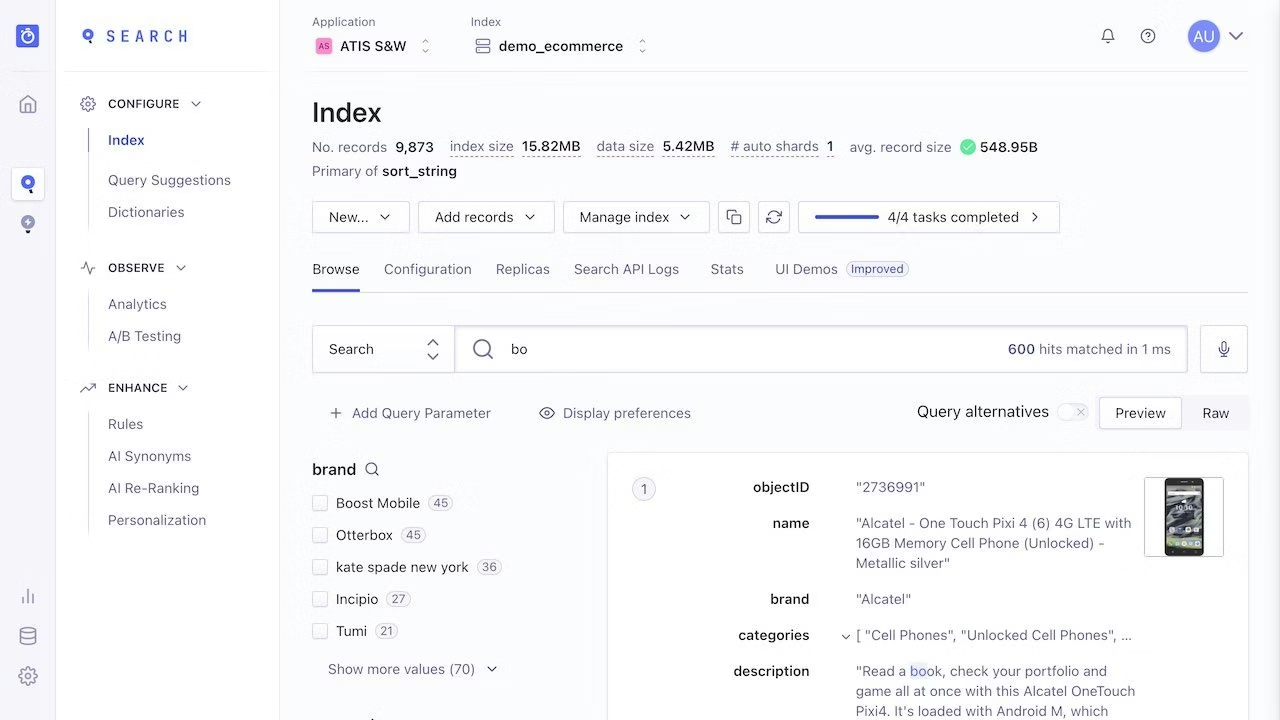
10. Algolia
Algolia is a hosted search-as-a-service platform designed for building exceptional search experiences in applications, e-commerce sites, and SaaS products. It's a premium alternative focused on speed, relevance, and developer experience.
Algolia Pros:
- Blazing Fast: Sub-50ms search responses globally via CDN distribution
- Instant Search: Optimized for search-as-you-type experiences
- AI-Powered Relevance: Machine learning-based ranking and personalization
- Typo Tolerance: Intelligent fuzzy matching handles user errors
- Faceted Search: Advanced filtering and refinement capabilities
- Global Infrastructure: 90+ data centers worldwide for low latency
- Analytics Built-In: Deep insights into user search behavior
- Easy Integration: Official libraries for all major frameworks
- Fully Managed: No infrastructure to maintain or scale
- Developer Experience: Excellent documentation and onboarding
Algolia Cons:
- Premium Pricing: More expensive than self-hosted alternatives
- SaaS Only: No self-hosted option for on-premises requirements
- Not for Log Analytics: Designed for app search, not log management
- Cost at Scale: Pricing based on records and operations can grow quickly
- Limited Customization: Less control than self-hosted solutions
- Vendor Lock-In: Proprietary API and data format
Integration / Migration:
- REST API and official SDKs for JavaScript, React, Vue, Angular, iOS, Android
- InstantSearch libraries for rapid implementation
- Import tools for CSV, JSON data
- Can complement Elasticsearch for user-facing search
- Migration tools available from Elasticsearch indexes
Best For: E-commerce sites, SaaS applications, and content platforms requiring instant, highly-relevant search experiences with minimal engineering effort. Ideal when budget allows for premium hosted search and developer productivity is prioritized over infrastructure control.
Use Cases:
- E-commerce product search - Fashion retailers, marketplaces
- SaaS application search - In-app search for productivity tools
- Documentation sites - Technical documentation with instant search
- Media and content - News sites, content discovery platforms
Pricing: Starts at $1/month for Build plan (10K searches), scales to Growth ($0.50/1K requests) and Enterprise (custom pricing).
Comparison Table: Elasticsearch Alternatives 2026
| Tool |
Deployment |
Full-Text Search |
Log Analytics |
Storage Efficiency |
Query Language |
Why Choose Over Elasticsearch |
Migration Ease |
| OpenObserve |
Self-hosted / Cloud |
Excellent |
Purpose-built |
Exceptional (140x compression) |
SQL, PromQL, ES-compatible |
Unified observability with 140x lower storage costs, SQL queries, no index mapping |
Very Easy (ES API compatible) |
| OpenSearch |
Self-hosted / AWS |
Excellent |
Strong |
Similar to ES |
OpenSearch DSL (ES-like) |
True open source (Apache 2.0), ES 7.x compatibility, AWS backing |
Very Easy (Drop-in ES replacement) |
| Apache Solr |
Self-hosted |
Excellent |
Limited |
Similar to ES |
Lucene Query Syntax |
Mature platform for document search, faceting, geospatial queries |
Moderate (Different data model) |
| ClickHouse |
Self-hosted / Cloud |
Limited |
Purpose-built |
Exceptional (100x compression) |
SQL |
Blazing analytics, columnar storage, 100x faster aggregations |
Moderate (Requires schema redesign) |
| Splunk |
SaaS / On-prem |
Good |
Purpose-built |
Similar to ES |
SPL |
Enterprise SIEM, compliance, advanced ML, extensive app ecosystem |
Moderate (Different architecture) |
| Grafana Loki |
Self-hosted / Cloud |
Basic |
Strong |
Good (Compressed logs) |
LogQL |
Cost-effective logs, simple operations, Grafana integration |
Moderate (Label-based paradigm) |
| Meilisearch |
Self-hosted / Cloud |
Excellent |
Limited |
Good |
JSON API |
Instant app search, sub-50ms responses, typo tolerance, developer UX |
Moderate (Different use case) |
| Typesense |
Self-hosted / Cloud |
Excellent |
Limited |
Good |
JSON API |
Simple app search, typo tolerance, easier than ES |
Moderate (Different use case) |
| Manticore Search |
Self-hosted |
Good |
Strong |
Good (10-50x compression) |
SQL, HTTP |
2.83x faster than ES, SQL interface, lower costs |
Easy (SQL queries) |
| Algolia |
SaaS Only |
Excellent |
Not designed |
Managed (N/A) |
JSON API |
Premium hosted search, global CDN, AI relevance, zero infrastructure |
Easy (Import tools available) |
How to Choose the Right Elasticsearch Alternative
Selecting the right Elasticsearch alternative depends on several factors:
1. Primary Use Case
For Log Analytics & Observability:
- Best choice: OpenObserve (unified logs/metrics/traces with massive cost savings)
- Alternatives: ClickHouse (if you need maximum analytical performance), Grafana Loki (if you're already using Grafana)
For Application Search (E-commerce, SaaS):
- Best choice: Meilisearch or Typesense (instant search experiences)
- Alternatives: OpenSearch (if you need full Elasticsearch compatibility), Solr (for complex faceting requirements)
For Enterprise Security/SIEM:
- Best choice: Splunk (industry leader despite cost)
- Alternatives: OpenSearch with Security Analytics, Elastic Security
For Multi-Purpose (Search + Analytics):
- Best choice: OpenObserve (handles both with excellent performance)
- Alternatives: OpenSearch (closest to Elasticsearch feature parity)
2. Budget Constraints
Tight Budget / Cost-Sensitive:
- OpenObserve (140x lower storage costs)
- Grafana Loki (minimal indexing overhead)
- ClickHouse (efficient resource utilization)
- Meilisearch/Typesense (for app search on a budget)
Moderate Budget:
- OpenSearch (infrastructure costs only)
- Manticore Search (lower than ES resource requirements)
- Managed services (Grafana Cloud, AWS OpenSearch Service)
Enterprise Budget:
- Splunk (premium features and support)
- Elastic Cloud (if committed to Elastic ecosystem)
- Algolia (premium hosted search with global CDN)
3. Technical Expertise
Strong DevOps/SRE Team:
- ClickHouse (requires data modeling expertise)
- OpenSearch (familiar if already running Elasticsearch)
- Apache Solr (mature but complex)
Limited Operations Resources:
- OpenObserve Cloud (managed with simple setup)
- Meilisearch Cloud (instant search as a service)
- Algolia (fully managed, zero infrastructure)
- Grafana Cloud (managed Loki, Tempo, Mimir)
Developer-Focused Teams:
- OpenObserve (SQL queries, simple operations)
- Meilisearch/Typesense (excellent developer experience)
- Algolia (superior developer UX and documentation)
4. Scale Requirements
Small to Medium (<1TB/day):
- Most options will work; prioritize simplicity and cost
- Meilisearch, Typesense, Algolia for app search
- OpenObserve, Grafana Loki for logs
Large Scale (1-100TB/day):
- OpenObserve (proven at petabyte scale)
- ClickHouse (linear scalability)
- OpenSearch (horizontal scaling)
- Grafana Loki (designed for cloud-native scale)
Enterprise Scale (>100TB/day):
- OpenObserve (petabyte-scale architecture)
- ClickHouse (handles hundreds of PB)
- Splunk (expensive but proven)
5. Deployment Preference
Self-Hosted Required:
- OpenObserve (flexible storage backends)
- OpenSearch (full control)
- ClickHouse (mature self-hosted deployment)
- Grafana Stack (complete control)
Cloud-Preferred:
- OpenObserve Cloud (managed service)
- AWS OpenSearch Service
- Grafana Cloud
- Meilisearch Cloud
- Algolia (fully managed SaaS)
Hybrid/Multi-Cloud:
- OpenObserve (runs anywhere)
- OpenSearch (cloud-agnostic)
- ClickHouse (multi-cloud support)
6. Query Language Preference
SQL Familiarity:
- OpenObserve (SQL for logs and traces)
- ClickHouse (ANSI SQL)
- Manticore Search (MySQL-compatible SQL)
PromQL (Prometheus users):
- OpenObserve (PromQL for metrics)
- Grafana Loki (LogQL similar to PromQL)
8. Vendor Lock-In Concerns
Maximum Flexibility:
- OpenTelemetry-native platforms (OpenObserve, Grafana)
- Open source with permissive licenses (Apache 2.0)
- Standard protocols (OTLP, Prometheus remote write)
Acceptable Vendor Commitment:
- Managed services with data export options
- Platforms with API compatibility layers
Conclusion
While Elasticsearch remains a powerful search and analytics engine, a growing number of alternatives address its key limitations: high costs, operational complexity, and resource intensity.
Key Takeaways:
OpenObserve leads as the best all-around Elasticsearch alternative, delivering 140x lower storage costs, unified observability, and Elasticsearch API compatibility without operational headaches
OpenSearch provides the safest path for organizations committed to the Elasticsearch ecosystem but concerned about licensing
ClickHouse offers unmatched analytical query performance for teams prioritizing speed over full-text search
Meilisearch and Typesense excel at application search with superior developer experience
Cost savings are real - migrations consistently show 60-90% infrastructure cost reductions
OpenTelemetry adoption makes switching platforms easier than ever before
Start small - Pilot with non-critical workloads before full migration
The right choice depends on your specific use case, team expertise, budget, and scalability requirements. Many teams find that modern alternatives not only save costs but also provide better performance, simpler operations, and features specifically designed for cloud-native architectures.
Take Action
Ready to explore the best Elasticsearch alternative?
Try OpenObserve:
FAQs: Elasticsearch Alternatives
What is the best Elasticsearch alternative in 2026?
OpenObserve is the best overall Elasticsearch alternative, offering unified observability for logs, metrics, and traces with 140x lower storage costs. It provides Elasticsearch API compatibility, SQL querying, and a single-binary deployment that scales from small teams to petabyte-scale operations. Unlike Elasticsearch, OpenObserve eliminates index mapping complexity, uses columnar storage for massive compression, and requires far less operational expertise.
Which Elasticsearch alternative is most cost-effective?
OpenObserve provides the most dramatic cost savings with 140x lower storage costs compared to Elasticsearch. This is achieved through:
- Parquet columnar storage with exceptional compression
- No need for replicas (stateless architecture)
- Efficient query execution without JVM overhead
- "Bring your own storage" support (S3, GCS, Azure Blob)
Other cost-effective options:
- Grafana Loki - Minimal indexing overhead
- ClickHouse - Efficient columnar storage
- Meilisearch/Typesense - Lightweight for application search
Is OpenSearch better than Elasticsearch?
OpenSearch advantages:
- Truly open source - Apache 2.0 license vs Elasticsearch's restrictive SSPL
- Community governance - Not controlled by single vendor
- Free advanced features - Security, alerting, anomaly detection included
- AWS backing - Strong enterprise support
Elasticsearch advantages:
- Latest features first - New capabilities debut in Elastic products
- More polished UI - Kibana generally more refined than OpenSearch Dashboards
- Larger ecosystem - More plugins and integrations (though gap closing)
For most organizations leaving Elasticsearch due to licensing concerns, OpenSearch is an excellent choice. However, for cost optimization and simplified operations, consider OpenObserve instead.
What is the best Elasticsearch alternative for log analytics?
For log analytics specifically, the top alternatives are:
OpenObserve - Purpose-built for observability with logs, metrics, and traces unified. SQL queries, 140x lower storage costs, and no index management overhead make it ideal for log-heavy workloads.
ClickHouse - Exceptional for analytical queries over logs but requires more setup and lacks built-in full-text search.
Grafana Loki - Great if you're already using Grafana and want simpler operations than Elasticsearch.
OpenSearch - If you need maximum Elasticsearch compatibility for log analytics.
Can I use OpenObserve with Kibana?
OpenObserve includes its own web UI with dashboards, query builder, and visualization tools.
Most teams find OpenObserve's native interface sufficient and prefer SQL queries over Elasticsearch DSL. The transition is smoother than expected because:
- SQL is more accessible to non-experts
- Query builder provides visual interface
- Dashboard migration is straightforward
- Alert syntax is simpler
How difficult is it to migrate from Elasticsearch to a different platform?
Migration difficulty depends on your destination platform:
Easiest migrations:
- OpenObserve - Elasticsearch API compatibility means minimal changes
- OpenSearch - Drop-in replacement for ES 7.x
- Algolia - Import tools available for data migration from various sources
Moderate effort:
- ClickHouse, Grafana Loki - Requires query language changes but log shippers (Fluentbit, Vector) support both
- Manticore Search - SQL interface instead of ES DSL
Key principle: You don't migrate historical data. Logs have retention periods (typically 7-30 days). You:
- Continue ingesting to Elasticsearch
- Start dual-shipping to new platform
- Switch primary ingestion when confident
- Decommission Elasticsearch after retention period expires
Most migrations complete in 2-4 weeks with proper planning.
What should I use instead of Elasticsearch for application search?
For user-facing application search (e-commerce, SaaS, documentation), specialized tools outperform Elasticsearch:
Best options:
- Meilisearch - Sub-50ms search, typo tolerance, instant search experiences
- Typesense - Similar to Meilisearch, excellent developer experience
- Algolia - Premium hosted option with outstanding relevance
These platforms are:
- Faster - Optimized for instant search (not analytics)
- Simpler - Minutes to deploy vs hours/days for Elasticsearch
- Cheaper - Lower infrastructure requirements
- Better UX - Built-in typo tolerance and relevance tuning
Use OpenObserve or Elasticsearch if you also need:
- Complex analytical queries
- Log aggregation
- Security analytics
- Large-scale data analysis
Does OpenObserve support OpenTelemetry?
Yes, OpenObserve is OpenTelemetry-native, supporting:
- OTLP ingestion - Direct ingestion of logs, metrics, and traces in OpenTelemetry Protocol format
- Auto-instrumentation - Works with OpenTelemetry collectors and agents
- Trace correlation - Automatic linking between logs, metrics, and traces via trace IDs
- Vendor-neutral - No proprietary formats or lock-in
This means you can:
- Instrument applications once with OpenTelemetry
- Send data to OpenObserve (or any OTel-compatible backend)
- Switch platforms in the future without re-instrumenting
Additional Resources