Full Stack Observability: The Complete Guide




Ready to get started?
Try OpenObserve Cloud today for more efficient and performant observability.
Full stack observability is the practice of gaining complete visibility into every layer of your technology stack-from frontend user interfaces to backend infrastructure-using unified metrics, logs, and traces. It enables engineering teams to understand system behavior, diagnose issues faster, and optimize performance across distributed environments.
What Is Full Stack Observability?
Full stack observability extends traditional monitoring by providing deep, correlated insights across all components of modern applications. Rather than siloed views of individual services, it delivers a unified understanding of how infrastructure, applications, and user experiences connect.
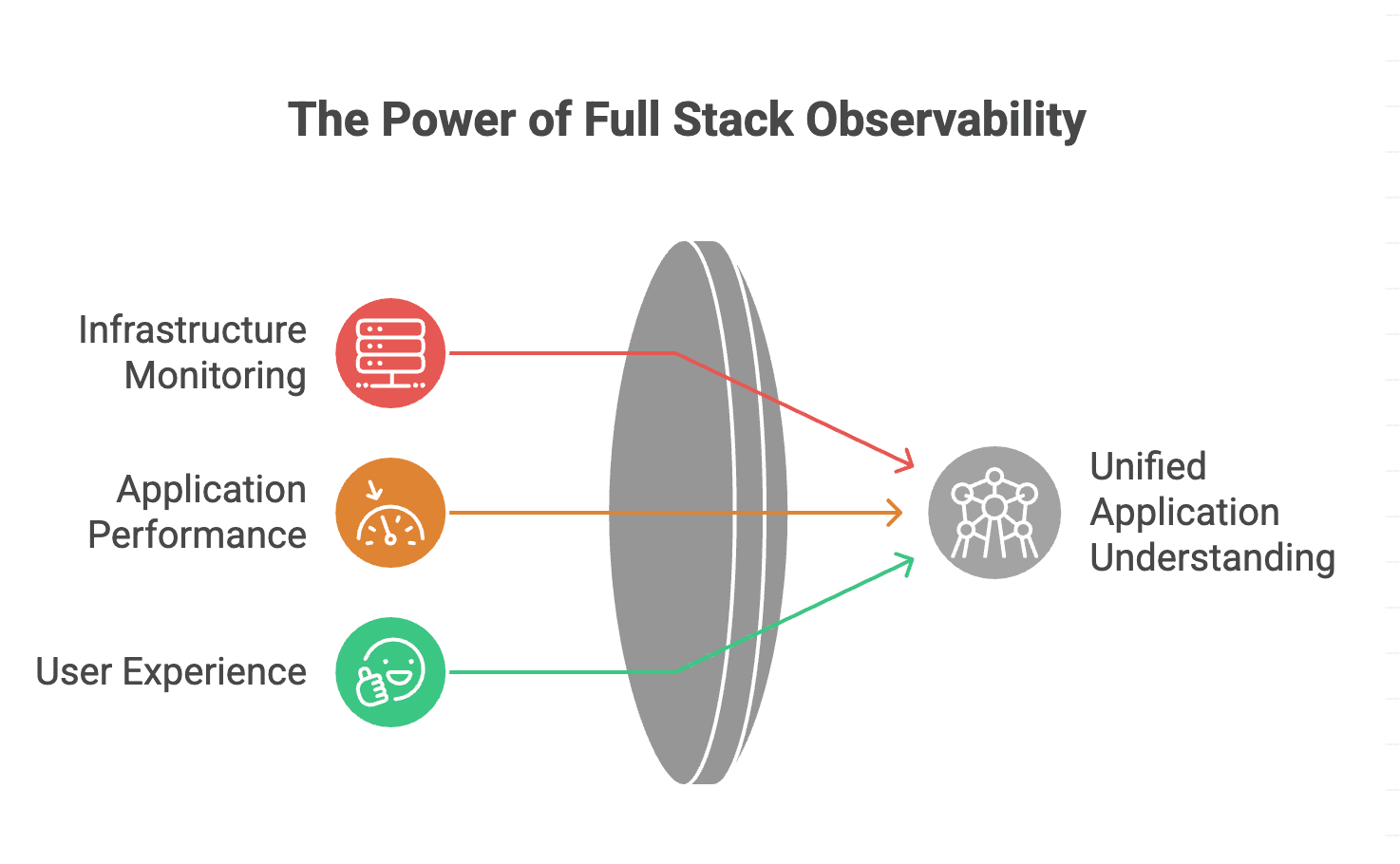
The three pillars of observability form its foundation: metrics (quantitative measurements over time), logs (timestamped records of discrete events), and traces (end-to-end request journeys across services). Full stack observability unifies these signals across every layer-cloud infrastructure, containers, microservices, APIs, databases, and frontend applications-into a single, coherent view.
Why Full Stack Observability Matters
Modern applications are increasingly complex. A single user request might traverse dozens of microservices, multiple cloud providers, and various databases before returning a response. When something breaks, pinpointing the root cause without comprehensive observability becomes nearly impossible.
Organizations adopting full stack observability report measurable improvements: faster mean time to resolution (MTTR), reduced downtime costs, improved developer productivity, and better customer experiences. According to industry analyses, companies with mature observability practices resolve incidents up to 60% faster than those relying on traditional monitoring alone.
Full Stack Observability vs. Traditional Monitoring
Traditional monitoring answers "is the system up?" while observability answers "why is the system behaving this way?" This distinction matters because modern distributed systems fail in unpredictable ways that predefined alerts cannot anticipate.
| Aspect | Traditional Monitoring | Full Stack Observability |
|---|---|---|
| Approach | Reactive, threshold-based | Proactive, exploratory |
| Data Types | Primarily metrics | Metrics, logs, traces unified |
| Scope | Individual components | Entire technology stack |
| Root Cause Analysis | Manual correlation | Automated, correlated insights |
| Unknown Issues | Limited detection | Discovers unknown unknowns |
Core Components of Full Stack Observability
Infrastructure Observability
Infrastructure observability covers servers, virtual machines, containers, Kubernetes clusters, and cloud services. It tracks resource utilization (CPU, memory, disk, network), container health, orchestration events, and cloud provider metrics. Tools ingest data from infrastructure agents, cloud APIs, and container runtimes to provide real-time visibility into the foundation supporting your applications.
Application Performance Monitoring (APM)
APM focuses on application-level behavior: response times, error rates, throughput, and service dependencies. Distributed tracing-a key APM capability-follows requests across service boundaries, revealing latency bottlenecks and failure points. Modern APM solutions automatically instrument code, reducing manual configuration overhead.
Log Management and Analysis
Logs capture detailed event data essential for debugging and compliance. Full stack observability platforms aggregate logs from all sources, enabling correlation with metrics and traces. Advanced capabilities include log parsing, pattern detection, and anomaly identification using machine learning.
Real User Monitoring (RUM)
RUM captures actual user experiences in browsers and mobile applications. It measures page load times, JavaScript errors, API call performance, and user journey completion rates. By connecting frontend performance to backend services, RUM closes the observability loop from user action to infrastructure response.
Synthetic Monitoring
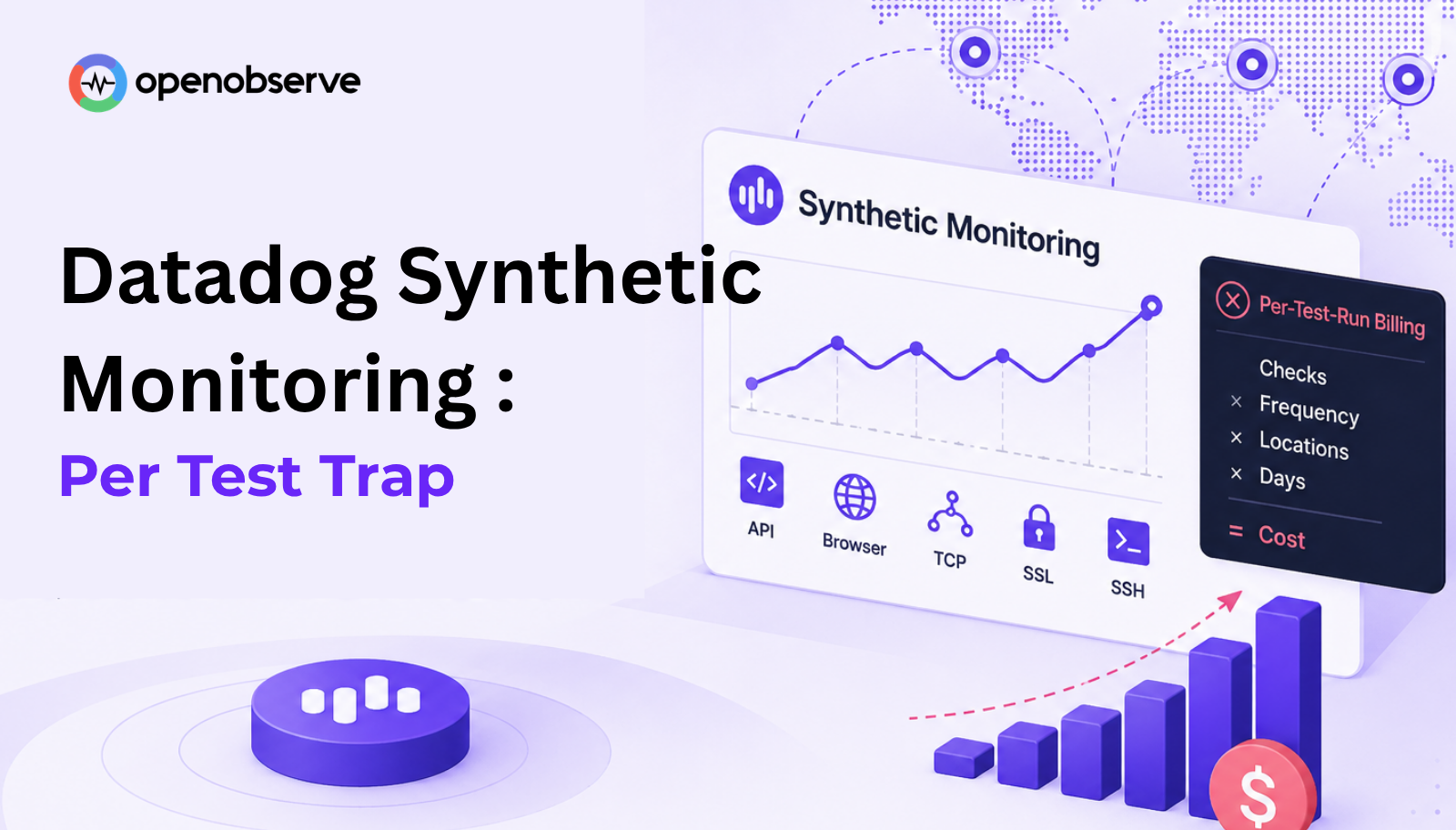
Synthetic monitoring proactively tests application availability and performance using scripted transactions. It detects issues before users encounter them, validates deployments, and monitors third-party dependencies. Combined with RUM, it provides complete visibility into user-facing performance.
Implementing Full Stack Observability: A Practical Approach
Step 1: Instrument Your Stack
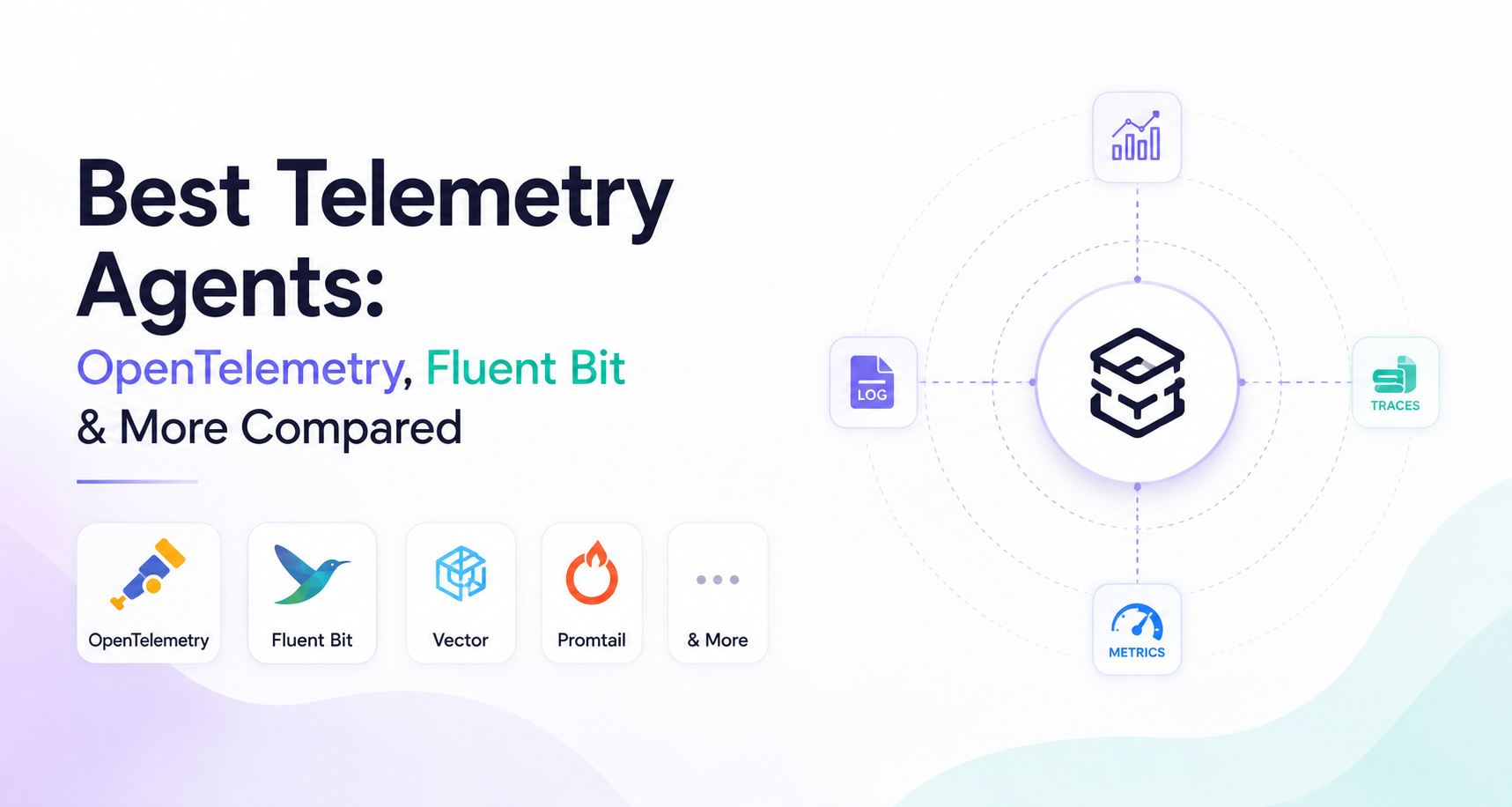
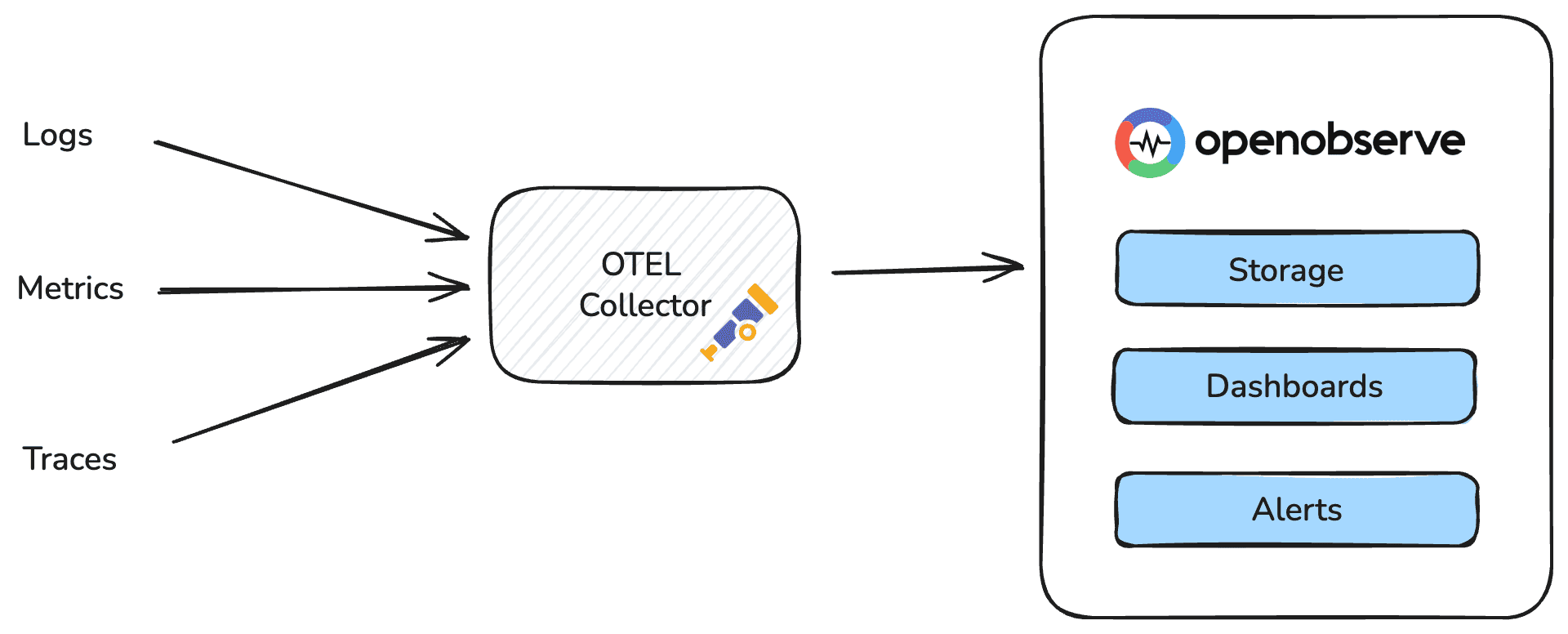
Begin by deploying agents and SDKs across your infrastructure and applications. Prioritize automatic instrumentation where available-most observability platforms offer auto-instrumentation for popular frameworks and languages. For custom applications, implement OpenTelemetry, the vendor-neutral standard for telemetry data collection.
Step 2: Establish Unified Data Collection
Route all telemetry data to a centralized platform that can correlate signals across layers. Ensure consistent tagging and naming conventions so that a trace ID can link a frontend error to the specific backend service and database query that caused it.
Step 3: Define Service Level Objectives (SLOs)
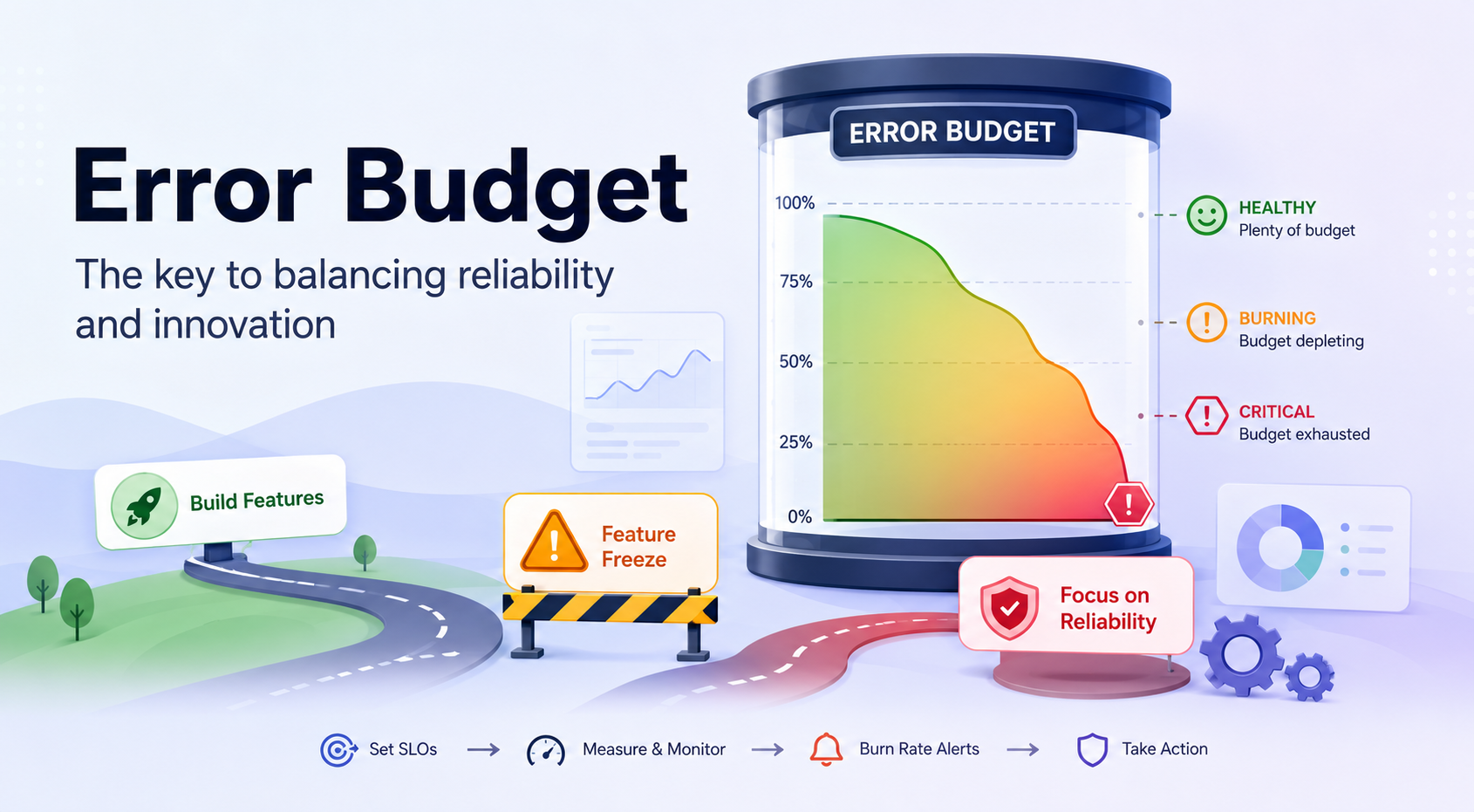
SLOs quantify reliability targets based on user experience. Instead of monitoring hundreds of low-level metrics, focus on SLOs like "99.9% of checkout requests complete in under 2 seconds." This approach aligns engineering effort with business outcomes.
Step 4: Build Dashboards and Alerts
Create dashboards that visualize system health at multiple levels: executive overviews, service-level details, and deep-dive debugging views. Configure alerts based on SLO violations and anomaly detection rather than static thresholds.
Step 5: Foster an Observability Culture
Tools alone do not create observability. Encourage developers to add meaningful instrumentation, conduct blameless postmortems using observability data, and continuously refine your approach based on incident learnings.
Top Full Stack Observability Tools and Platforms
Several platforms lead the full stack observability market, each with distinct strengths:
Datadog offers comprehensive coverage across infrastructure, APM, logs, RUM, and security with strong integrations and an intuitive interface. Dynatrace emphasizes AI-powered automation and automatic discovery, making it popular for complex enterprise environments. New Relic provides a generous free tier and strong developer experience with its all-in-one platform approach.
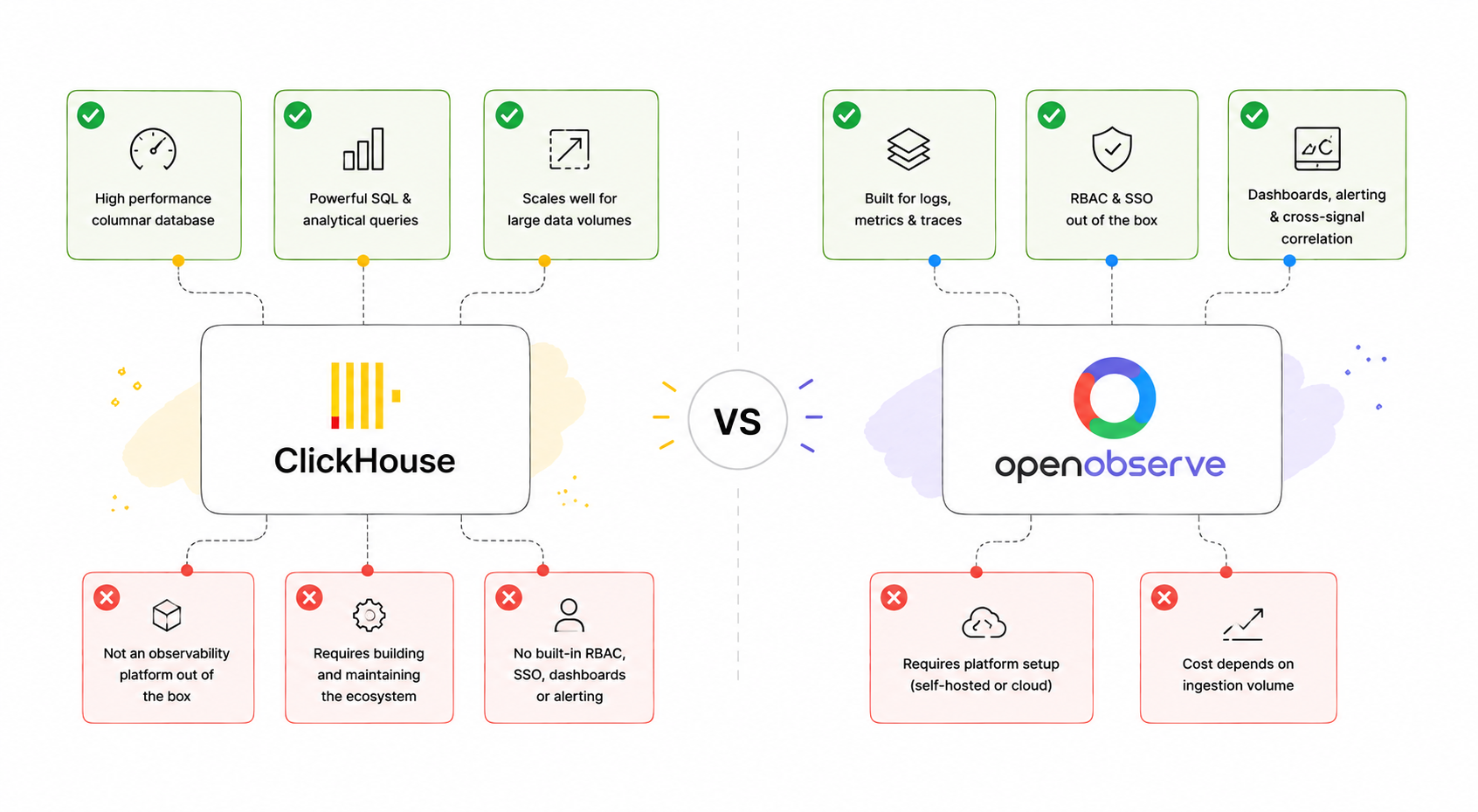
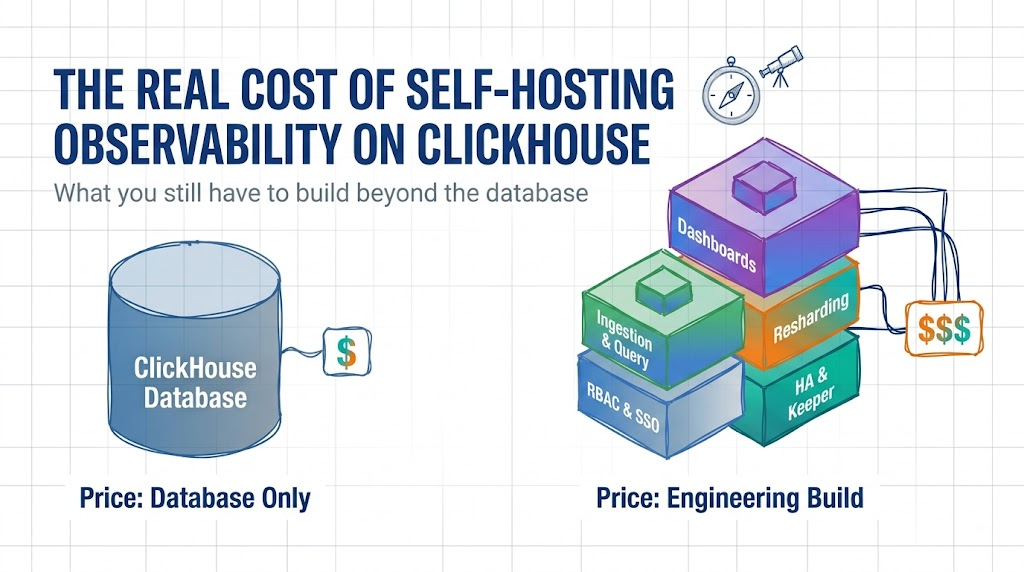
OpenObserve has emerged as a compelling open-source alternative for organizations seeking cost-effective full stack observability. Built in Rust for high performance, OpenObserve provides unified handling of logs, metrics, and traces with significantly lower storage costs compared to Elasticsearch-based solutions-often reducing storage requirements by up to 140x through advanced compression. Its single-binary deployment simplifies operations, while native support for OpenTelemetry ensures compatibility with modern instrumentation standards. OpenObserve offers both a self-hosted open-source version and a cloud-managed option, making it accessible for teams of all sizes. Its intuitive interface, built-in dashboards, and SQL-based query language lower the learning curve for teams transitioning from legacy logging solutions.
For organizations committed to open standards, OpenTelemetry-native platforms like OpenObserve offer vendor flexibility while ensuring data portability and avoiding lock-in.
Full Stack Observability Best Practices
- Correlate across all telemetry types. The power of full stack observability comes from connecting metrics, logs, and traces. A spike in error rates should link directly to relevant error logs and the specific traces showing failed requests.
- Implement context propagation. Ensure trace context flows through every service, queue, and database call. Without complete trace propagation, you lose visibility at integration boundaries.
- Control data volume strategically. Observability data grows rapidly. Use intelligent sampling for traces, log filtering for noise reduction, and metric aggregation to balance insight depth with cost management.
- Adopt OpenTelemetry. The industry has converged on OpenTelemetry as the standard for instrumentation. Adopting it protects your investment and enables platform flexibility.
- Shift observability left. Integrate observability into development workflows. Developers should access production telemetry, test instrumentation in staging, and treat observability as a feature rather than an operations afterthought.
Challenges and How to Overcome Them
- Data silos remain common when teams use different tools for infrastructure, applications, and logs. Address this by standardizing on a unified platform or ensuring strong integrations between specialized tools.
- Alert fatigue occurs when teams receive too many low-value notifications. Combat this by alerting on symptoms (user-facing SLO violations) rather than causes, and by tuning thresholds based on actual incident data.
- Cost management challenges arise as data volumes grow. Implement tiered storage, intelligent sampling, and data retention policies aligned with business requirements.
- Skill gaps slow adoption. Invest in training, establish internal communities of practice, and start with quick wins that demonstrate observability value to skeptical teams.
The Future of Full Stack Observability
Several trends are shaping observability's evolution. AI and machine learning increasingly automate anomaly detection, root cause analysis, and remediation recommendations. eBPF-based instrumentation enables deep kernel-level visibility without code changes. Observability-driven development embeds telemetry into the software development lifecycle from design through production.
The convergence of observability with security (often called "observability 2.0" or "unified observability") promises single platforms addressing performance, reliability, and security use cases. As systems grow more complex, full stack observability becomes not just valuable but essential for operating reliable, performant applications.
Frequently Asked Questions
About the Author
Simran Kumari

Passionate about observability, AI systems, and cloud-native tools. All in on DevOps and improving the developer experience.
Follow OpenObserve on Google
Add OpenObserve as a preferred source to see more of our articles in Google Search and Top Stories.