Getting Started with OpenObserve
A complete comparison of the best synthetic monitoring tools in 2026: HTTP, TCP, TLS, SSH, and browser checks, private location support, alerting, and pricing, for engineering, SRE, and platform teams.

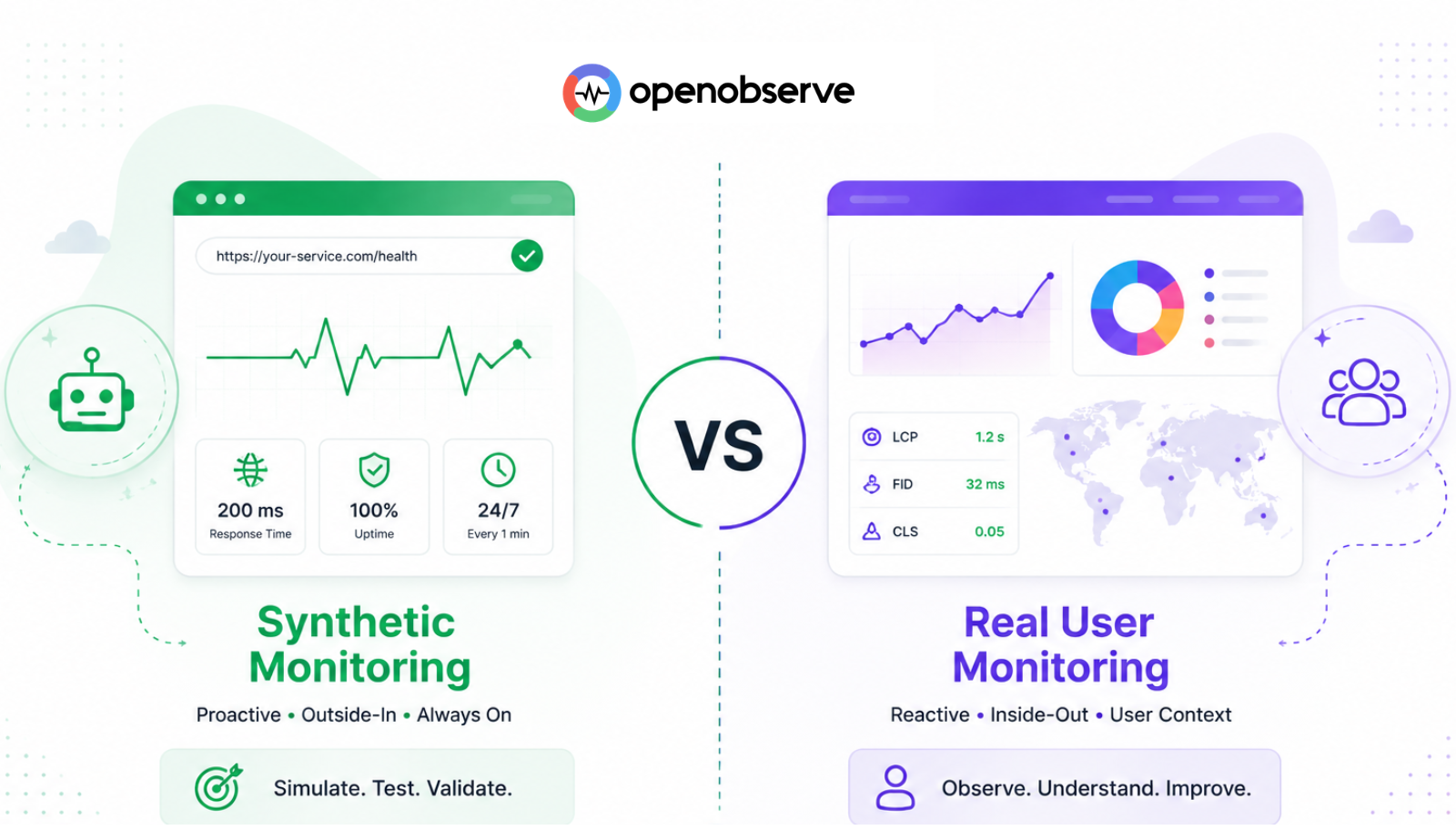
Synthetic monitoring runs scheduled checks from outside your systems; RUM captures what real visitors experience. Learn what synthetic monitoring is, how it differs from RUM, and when to use each.
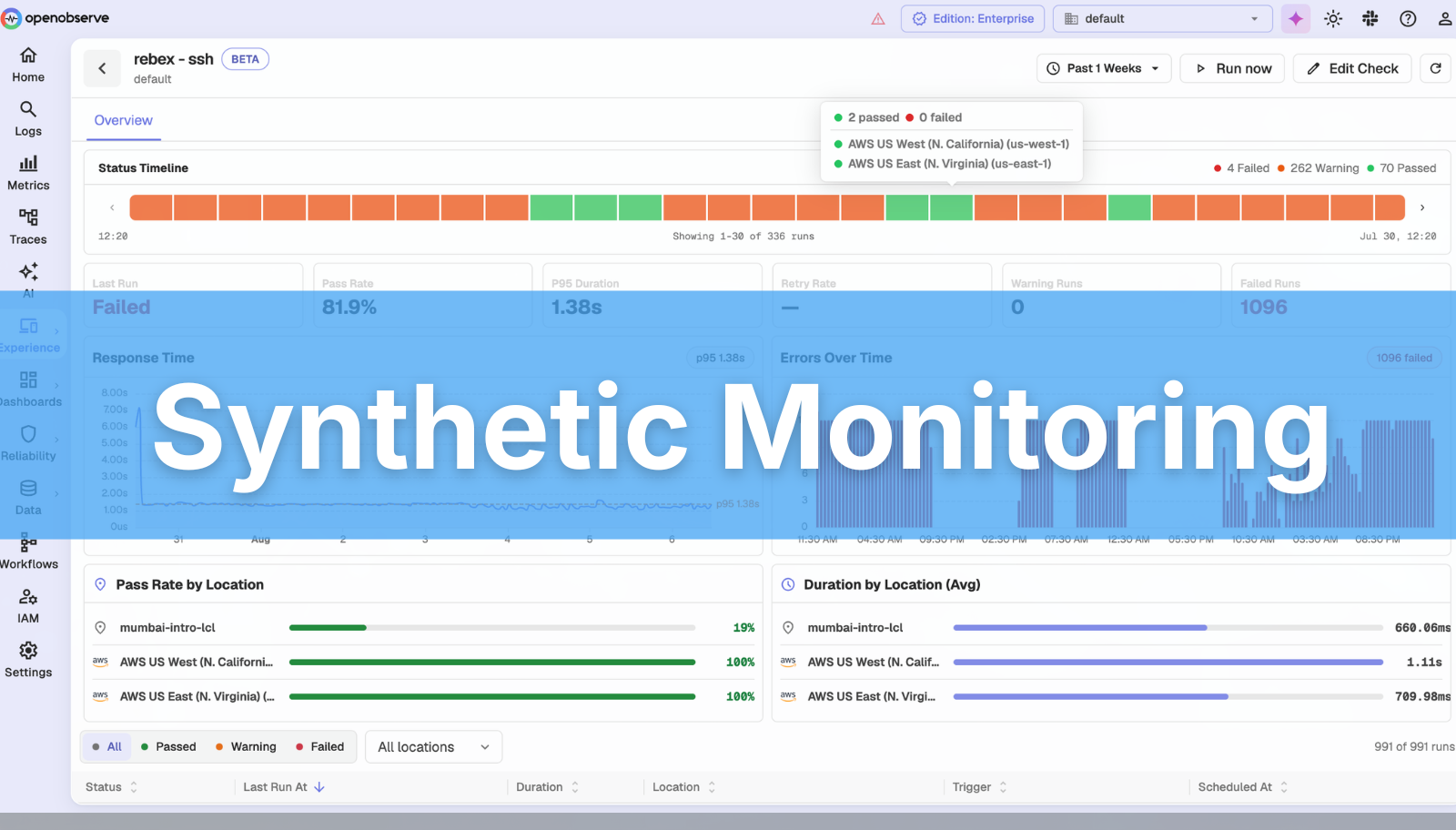
Synthetic Monitoring is now in beta in OpenObserve Cloud: HTTP, TCP, TLS, and SSH checks with per-type assertions, full Playwright browser checks from a no-code recorder or your own scripts, and Private Locations to reach internal endpoints, all landing in the same platform as your logs, metrics, and traces.
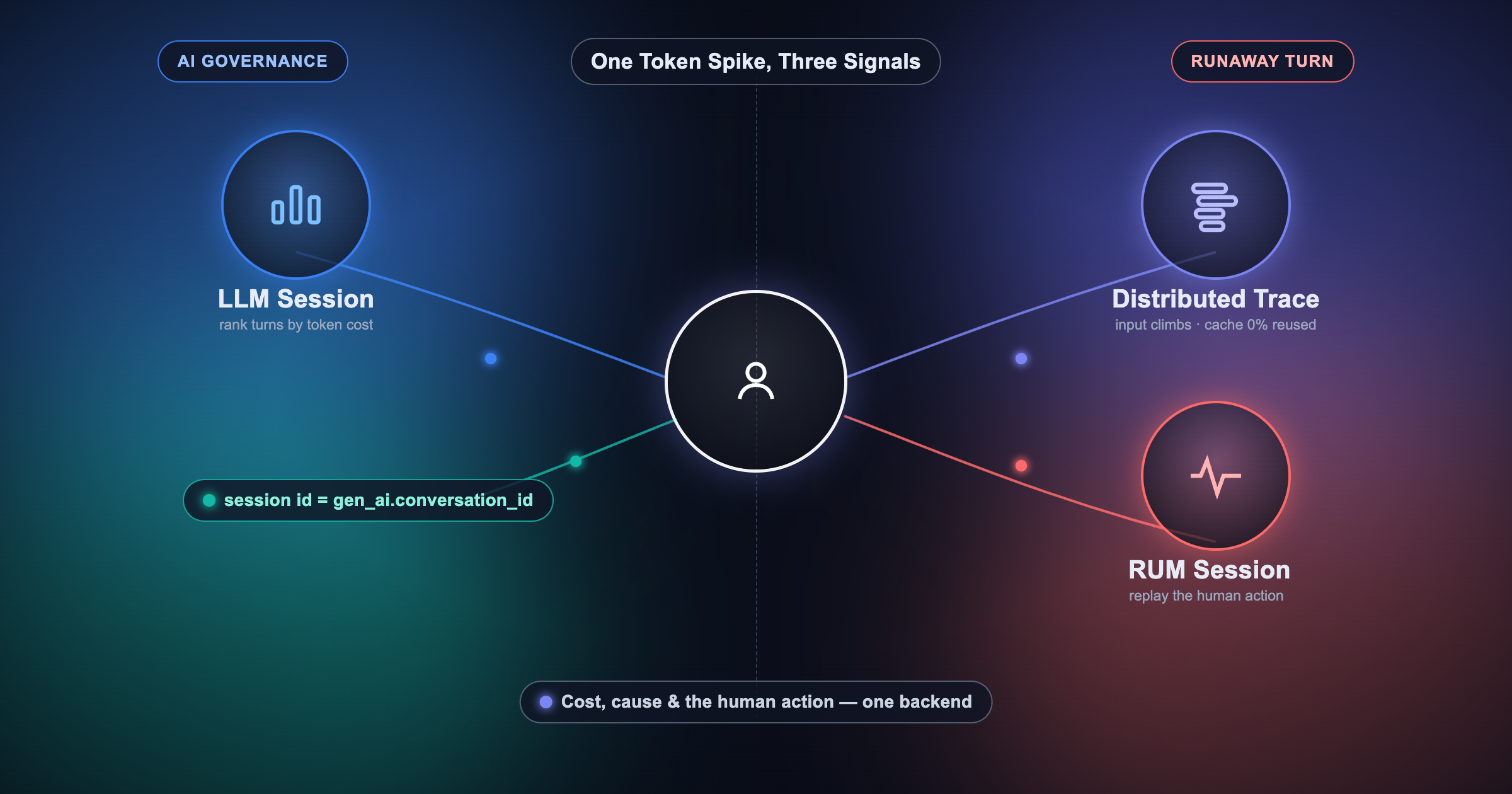
How an AI-governance engineer walks one anomalous LLM turn across three signals in OpenObserve — session, distributed trace, and RUM replay — to pin down cost, cause, and the human action behind a token spike.
A practical engineering runbook for getting the most out of OpenObserve Real User Monitoring control ingestion volume and cost, protect the page load, mask PII, enrich sessions with business context, and stitch frontend events to backend traces.
Learn how to use OpenObserve's RUM source map feature to transform cryptic minified stack traces into readable, debuggable code with original filenames, line numbers, and function names. Covers setup, CI/CD integration, and troubleshooting.